
| REPORT ATTRIBUTE | DETAILS |
|---|---|
| Historical Period | 2019-2022 |
| Base Year | 2023 |
| Forecast Period | 2024-2032 |
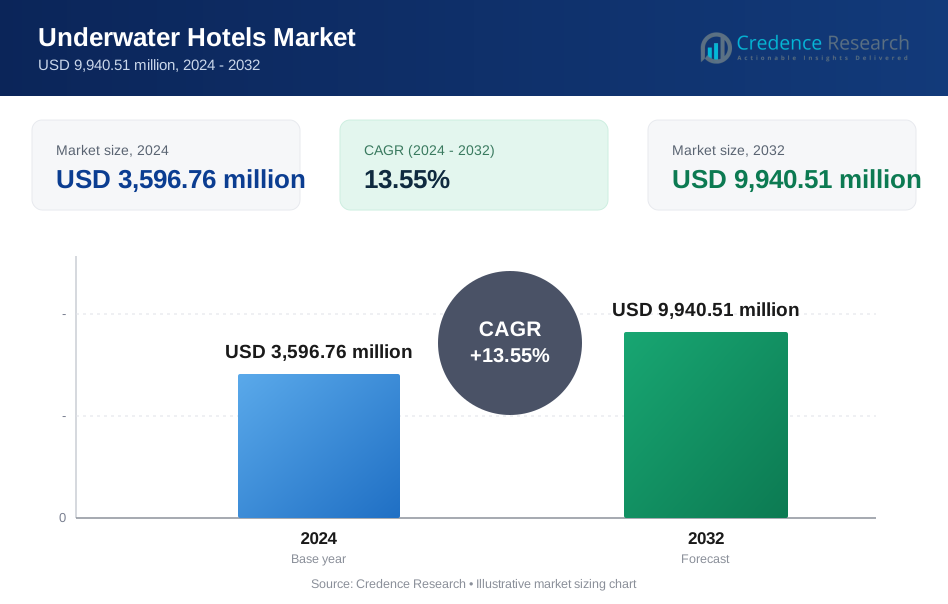
| Underwater Hotels Market Size 2024 | USD 3,596.76 million |
| Underwater Hotels Market, CAGR | 13.55% |
| Underwater Hotels Market Size 2032 | USD 9,940.51 million |
Market Overview
The Underwater Hotels Market is projected to grow from USD 3,596.76 million in 2024 to USD 9,940.51 million by 2032, reflecting a compound annual growth rate (CAGR) of 13.55%.
The Underwater Hotels Market is driven by increasing demand for unique and luxurious travel experiences, as well as advancements in marine construction technology. Rising disposable incomes and a growing preference for experiential tourism further fuel market growth. Trends include integrating sustainable practices and eco-friendly designs to protect marine ecosystems, enhancing guest experiences with panoramic underwater views and marine life interactions. Additionally, collaborations with marine biologists and environmental organizations are becoming more common, promoting conservation efforts and elevating the appeal of underwater accommodations.
The Underwater Hotels Market is experiencing significant growth in key regions such as the Maldives, Dubai, and the Caribbean, driven by their prime locations and marine biodiversity. The Maldives, renowned for its stunning marine life, hosts premier underwater hotels like Huvafen Fushi Maldives and The Manta Resort. Dubai, with its innovative tourism infrastructure, boasts luxurious offerings like Hydropolis and The Poseidon Underwater Resort. In the Caribbean, unique properties such as Jules' Undersea Lodge attract adventure seekers. Leading players in this market include The Shimao Wonderland, Conrad Hilton, and Water Discus Hotel, all of which are enhancing their luxury and experiential offerings to attract affluent travelers.
Market Drivers
Unique and Luxurious Experiences
The allure of underwater hotels lies in their ability to offer rare and opulent experiences, attracting high-net-worth individuals and discerning travelers. For instance, the Water Discus Underwater Hotel, a luxury hotel project in Dubai, UAE, designed by Deep Ocean Technology (DOT) in collaboration with researchers from Gdansk University of Technology, offers a captivating ambiance to tourists. Similarly, the Conrad Maldives Rangali Island hotel in the Maldives features a luxury two-level residence with a master bedroom submerged over 16 feet below sea level. These establishments provide an unparalleled opportunity to connect with the marine environment, immersing guests in a unique setting that blends luxury and adventure. With world-class amenities and services, underwater hotels cater to the demands of the luxury market, ensuring comfort and exclusivity. The unique combination of being surrounded by marine life while enjoying the finest in hospitality makes these hotels highly appealing to those seeking extraordinary travel experiences.
Technological Advancements
Technological advancements play a crucial role in the feasibility and appeal of underwater hotels. Innovations in materials and construction techniques have made these hotels safer and more viable. For example, the use of acrylic panels in underwater structures has improved significantly, with some manufacturers now producing panels that can withstand pressures equivalent to depths of 100 meters or more. Enhanced marine technology allows for better underwater observation, enriching the guest experience by providing clear views of marine life. Moreover, sustainability is becoming a key focus, with technological innovations helping to reduce the environmental impact of underwater hotels. These advancements ensure that the hotels are not only luxurious but also environmentally responsible, aligning with the growing global emphasis on sustainability.
Growing Interest in Adventure and Experiential Tourism
The rising trend of adventure and experiential tourism is a significant driver for the underwater hotels market. Travelers are increasingly seeking thrill and novelty in their accommodations, moving away from traditional hotel experiences. Underwater hotels provide a unique platform for marine life exploration, offering guests a front-row seat to observe underwater ecosystems. This desire for adventure and the diversification of tourism options have led to a growing popularity of niche offerings like underwater hotels. As traditional tourism matures, these unconventional accommodations stand out, appealing to those looking for memorable and immersive experiences.
Rising Disposable Incomes and Affluent Traveler Base
The increasing disposable incomes in emerging markets are expanding the customer base for luxury travel, including underwater hotels. Affluent travelers are seeking unique and extraordinary experiences to indulge their growing spending power. This desire for indulgence is driving the demand for luxurious and unique accommodations. Additionally, government support and tourism promotion play a vital role. Underwater hotels contribute significantly to local economies through tourism revenue and job creation. Some governments are also promoting these hotels as a means to support marine conservation efforts, blending economic benefits with environmental stewardship.
Market Trends
Emphasis on Sustainability and Eco-Tourism
The underwater hotels market is increasingly emphasizing sustainability and eco-tourism to meet the growing environmental consciousness of guests. For instance, when surveyed in 2022, over 80 percent of global travelers said that sustainable tourism was important to them and that they were willing to adopt sustainable travel incentives. Travelers are seeking accommodations that align with their values, prioritizing sustainable practices and eco-friendly operations. Underwater hotels are responding by incorporating various green initiatives, such as energy-efficient technologies, waste reduction programs, and support for marine conservation efforts. These hotels often partner with environmental organizations to protect marine ecosystems and promote biodiversity. Additionally, offering educational experiences about marine life and conservation has become a significant trend, providing guests with opportunities to learn and engage in environmental stewardship. This focus on sustainability not only enhances the guest experience but also helps preserve the natural beauty that makes underwater hotels so unique.
Diversification of Underwater Experiences
To cater to a broader range of preferences and enhance their appeal, underwater hotels are diversifying their offerings beyond accommodation. Expanding amenities to include underwater restaurants, spas, and dive centers allows guests to enjoy a more comprehensive underwater experience. This diversification helps attract different guest segments, including families, couples, and adventure seekers, by tailoring experiences to specific needs and preferences. For instance, some hotels are creating themed underwater environments featuring particular marine life, offering unique and immersive experiences. Customization is key, with services and experiences being adapted to individual guest desires, ensuring a memorable and personalized stay. This strategic diversification not only broadens the market appeal but also enhances guest satisfaction by providing a variety of engaging activities.
Market Challenges Analysis
High Construction and Operational Costs
The construction and operational costs associated with underwater hotels present significant challenges. For instance, the cost per square foot for underwater construction can vary from $1,000 to $5,000, compared to $400-$700 per square foot for luxury above-water hotels. Building underwater structures requires complex engineering and specialized expertise, driving up costs due to the need for advanced materials and technologies that can withstand underwater pressure and corrosion. Maintenance and repairs of these structures are equally challenging and costly, requiring continuous monitoring to ensure their integrity and functionality. Additionally, powering underwater facilities demands efficient and sustainable energy systems, which can be expensive to implement and maintain. These high costs make it difficult for many developers to enter the market, limiting the growth and expansion of underwater hotels.
Environmental Impact and Regulations
The environmental impact and stringent regulations surrounding underwater hotels pose substantial challenges. Construction and operation of these hotels can disrupt marine ecosystems, affecting marine life and habitats. Developers must navigate a complex regulatory landscape, adhering to strict environmental regulations and obtaining necessary permits, which can be both time-consuming and costly. Waste management in a marine environment presents unique challenges, requiring innovative solutions to prevent pollution and ensure sustainability. Balancing the development of underwater hotels with the need to protect marine ecosystems is crucial for the long-term viability of this market.
Market Segmentation Analysis:
By Type:
The underwater hotels market is categorized into luxury type and general type underwater hotels. Luxury type underwater hotels dominate the market, offering opulent experiences with high-end amenities, personalized services, and exclusive access to marine life. These hotels cater to affluent travelers seeking unique and immersive experiences, often featuring underwater suites, fine dining, and advanced marine observation technology. On the other hand, general type underwater hotels provide a more accessible option, targeting a broader range of tourists. These hotels focus on offering unique underwater experiences at a relatively lower cost, making them attractive to adventure seekers and families looking for an extraordinary stay without the premium price tag of luxury options.
By Class:
The underwater hotels market is further segmented into business class and economic class based on class. Business class underwater hotels are designed to cater to high-end clients, including corporate travelers and luxury tourists. These establishments offer premium services, such as private conference facilities, high-speed internet, and concierge services, ensuring a seamless and luxurious experience. Economic class underwater hotels, meanwhile, aim to attract budget-conscious travelers who still desire the unique experience of staying underwater. These hotels provide essential amenities and comfortable accommodations without the frills, making the underwater experience more accessible to a wider audience. This segmentation helps cater to diverse customer preferences, ensuring growth across different market segments.
Segments:
Based on Type:
- Luxury Type Underwater Hotel
- General Type Underwater Hotel
Based on Class:
- Business Class
- Economic Class
Based on Booking Type:
- Online Booking
- Offline Booking
Based on the Geography:
- North America
- US
- Canada
- Mexico
- Europe
- Germany
- France
- UK
- Italy
- Spain
- Rest of Europe
- Asia Pacific
- China
- Japan
- India
- South Korea
- South-east Asia
- Rest of Asia Pacific
- Latin America
- Brazil
- Argentina
- Rest of Latin America
- Middle East & Africa
- GCC Countries
- South Africa
- Rest of Middle East and Africa
Regional Analysis
North America
North America leads the market with a substantial 40% share, driven by its innovative underwater accommodations and strong tourism infrastructure. For instance, the Jules' Undersea Lodge in Key Largo, Florida, provides guests with the unique experience of scuba diving to their rooms, which are situated 21 feet below the surface of a tropical lagoon. The region's dominance is particularly evident in Florida, where luxury underwater suites offer guests unparalleled views of marine life in the Florida Keys. Additionally, the Caribbean islands contribute significantly to North America's market share, with several high-end resorts featuring submerged rooms that provide immersive aquatic experiences. The region's success in this niche market is further bolstered by its advanced technologies in underwater construction and life support systems, ensuring both safety and comfort for guests. North America's underwater hotels also benefit from the area's clear waters and diverse marine ecosystems, which create ideal conditions for these unique accommodations.
Asia-Pacific
Asia-Pacific follows closely behind, claiming a 35% market share and demonstrating rapid growth in the underwater hotels sector. This region's success is largely attributed to the Maldives, which has become synonymous with luxury underwater accommodations. Several world-renowned resorts in the Maldives offer spectacular underwater suites and restaurants, setting new standards for aquatic hospitality. Beyond the Maldives, countries like Singapore and the United Arab Emirates (particularly Dubai) are making significant strides in underwater hotel development. These destinations leverage their coastal locations and commitment to innovative tourism to create extraordinary underwater experiences. The Asia-Pacific region's market share is expected to increase in the coming years, driven by ongoing investments in cutting-edge hospitality concepts and a growing demand for unique, luxury travel experiences. The region's success is also fueled by its ability to combine underwater stays with traditional overwater bungalows and beachfront resorts, offering guests a comprehensive tropical getaway.
Key Player Analysis
- The Shimao Wonderland
- Jules' Undersea Lodge
- The Manta Resort
- The Apeiron Island Hotel
- Hydropolis
- The Lifeboat Hotel
- Conrad Hilton
- Water Discus Hotel
- The Poseidon Underwater Resort
- Huvafen Fushi Maldives
Competitive Analysis
The Underwater Hotels Market is highly competitive, with leading players such as Huvafen Fushi Maldives, Water Discus Hotel, and The Poseidon Underwater Resort setting industry standards through luxurious and innovative offerings. Huvafen Fushi Maldives leverages its prime location and unique underwater spa to attract high-end travelers seeking exclusive experiences. Water Discus Hotel stands out with its futuristic design and cutting-edge technology, appealing to tech-savvy and adventure-seeking guests. The Poseidon Underwater Resort emphasizes personalized luxury and immersive marine experiences, catering to the elite market segment. Other notable players like The Shimao Wonderland and Conrad Hilton focus on integrating sustainability and luxury, enhancing their appeal in the eco-conscious luxury travel market. These companies continuously innovate in terms of amenities, guest experiences, and environmental stewardship to maintain a competitive edge and attract affluent clientele in the growing underwater hotels market.
Recent Developments
- In January 2024, Jules’ Undersea Lodge was used as part of a research project by the University of North Dakota’s AERO (Adventure Expedition Research and Outreach) team. Researchers spent 24 hours in the underwater habitat to explore space-related studies, including testing ham radio communication underwater.
- In June 2024, The Lerwick Lifeboat provided assistance to an 11-metre yacht with engine problems off the island of Shetland.
- In June 2024, Huvafen Fushi Maldives announced the completion of its significant refurbishment.
- In June 2023, Dr. Joseph Dituri broke the record for the longest time living underwater at ambient pressure at the Jules’ Undersea Lodge in Key Largo. He spent 74 days residing in the lodge, surpassing the previous record of 73 days.
- In February 2023, Hilton announced the opening of six new properties under its luxury Conrad Hotels & Resorts brand, expanding its global footprint and offering more luxurious spaces for independent exploration and understanding of various cultures.
Market Concentration & Characteristics
The Underwater Hotels Market exhibits moderate to high market concentration, characterized by a small number of key players dominating the industry. Leading hotels like The Poseidon Underwater Resort, Water Discus Hotel, and Huvafen Fushi Maldives set the benchmark for luxury and innovation, leveraging advanced engineering and unique guest experiences to maintain a competitive edge. These hotels often feature world-class amenities, such as underwater spas and restaurants, attracting affluent travelers seeking exclusive and immersive experiences. The market is defined by its focus on luxury, exclusivity, and sustainability, with significant investments in advanced technology and environmental conservation efforts. Despite the high operational costs and complex regulatory environment, the allure of underwater accommodations continues to drive demand, positioning these niche offerings as prestigious destinations within the luxury travel sector.
Report Coverage
The research report offers an in-depth analysis based on Type, Class, Booking Type and Geography. It details leading market players, providing an overview of their business, product offerings, investments, revenue streams, and key applications. Additionally, the report includes insights into the competitive environment, SWOT analysis, current market trends, as well as the primary drivers and constraints. Furthermore, it discusses various factors that have driven market expansion in recent years. The report also explores market dynamics, regulatory scenarios, and technological advancements that are shaping the industry. It assesses the impact of external factors and global economic changes on market growth. Lastly, it provides strategic recommendations for new entrants and established companies to navigate the complexities of the market.
Future Outlook
- The underwater hotels market will experience significant growth driven by increasing demand for unique and luxurious travel experiences.
- Advancements in marine technology and construction will make underwater hotels more feasible and safe.
- Sustainability will become a key focus, with eco-friendly practices and marine conservation efforts gaining importance.
- The integration of advanced digital amenities and in-room technology will enhance guest comfort and convenience.
- Geographic expansion into new underwater destinations will diversify market offerings and attract a broader audience.
- Collaboration with local communities and stakeholders will support sustainable tourism and economic development.
- Customization and personalized services will cater to diverse guest preferences, enhancing overall satisfaction.
- The development of additional underwater facilities such as restaurants, spas, and dive centers will expand the range of guest experiences.
- Rising disposable incomes in emerging markets will increase the customer base for luxury underwater accommodations.
- Strategic partnerships and innovative marketing will play crucial roles in attracting high-end clientele and maintaining market competitiveness.
Request a Free Sample
Fill in your details and we'll send you a free sample report.
- Sample data tables & charts
- Research methodology
Need a Custom Version of This Report?
Tailor the scope, geography, or segments to your exact requirements.
- Custom geography or segment scope
- Direct access to our analyst team
Frequently Asked Questions
What is the current size of the Underwater Hotels Market?
What factors are driving the growth of the Underwater Hotels Market?
What are the key segments within the Underwater Hotels Market?
What are some challenges faced by the Underwater Hotels Market?
Who are the major players in the Underwater Hotels Market?
Table of Content
Chapter 1. Report Introduction
- 1.1 Report Description & Purpose
- 1.1.1 Report Title & Market Definition
- 1.1.2 Unique Selling Propositions (USP) & Key Differentiators
- 1.1.3 Value Proposition for Stakeholders
- 1.2 Research Objectives
- 1.2.1 Market Sizing Objectives (Volume & Revenue)
- 1.2.2 Segmentation Objectives
- 1.2.3 Competitive Intelligence Objectives
- 1.2.4 Forecast & Scenario Objectives
- 1.3 Report Scope
- 1.3.1 Underwater Hotels Scope – Types & Subtypes Covered
- 1.3.2 Geographic Scope – Regions & Countries Covered
- 1.3.3 Historical Period, Base Year & Forecast Period (2024; forecast to 2032)
- 1.3.4 Inclusions & Exclusions
- 1.4 HS Code & Classification Framework
- 1.5 Currency, Units & Pricing Basis
- 1.6 Target Stakeholders
- 1.7 Limitations & Assumptions
Chapter 2. Executive Summary
- 2.1 Global Underwater Hotels Market Snapshot
- 2.1.1 Market Size – Historical (2024) & Forecast (2024-2032) (2024: USD 3,596.76 million → 2032: USD 9,940.51 million)
- 2.1.2 Volume & Revenue – Global Totals
- 2.1.3 Key Market Highlights – Top Five Facts
- 2.2 Underwater Hotels Market Segmentation Snapshot
- 2.2.1 Market Split by Region – 2024 vs. 2032
- 2.3 Competitive Snapshot
- 2.3.1 Top 10 Players by Revenue Share – 2024
- 2.3.2 Top 10 Players by Volume Share – 2024
- 2.3.3 Recent Strategic Developments (18-Month Summary)
- 2.4 Key Investment Highlights & Strategic Conclusions
Chapter 3. Underwater Hotels Market Dynamics & Industry Analysis
- 3.1 Market Overview & Context
- 3.1.1 Underwater Hotels Market Position in the Broader Automotive Value Chain
- 3.1.2 OEM vs. Replacement Market Dynamics
- 3.1.3 Market Maturity & Development Stage by Region
- 3.2 Underwater Hotels Market Drivers
- 3.3 Underwater Hotels Market Restraints & Challenges
- 3.4 Underwater Hotels Market Opportunities
- 3.5 Porter's Five Forces Analysis
- 3.5.1 Threat of New Entrants
- 3.5.2 Bargaining Power of Suppliers
- 3.5.3 Bargaining Power of Buyers
- 3.5.4 Threat of Substitutes
- 3.5.5 Competitive Rivalry – Intensity Assessment
- 3.6 Underwater Hotels Value Chain Analysis
- 3.6.1 Upstream – Raw Material/Input Suppliers
- 3.6.1.1 Raw Material/Input 1
- 3.6.1.2 Raw Material/Input 2
- 3.6.1.3 Raw Material/Input 3
- 3.6.2 Midstream – Production/Manufacturing/Service Delivery
- 3.6.2.1 Production/Process Overview
- 3.6.2.2 Key Facility Locations & Capacity by Manufacturer
- 3.6.3 Downstream – Distribution & End Consumer
- 3.6.3.1 Primary Channel – B2B/OEM
- 3.6.3.2 Secondary Channels – Dealer, Retail, Online, Direct
- 3.6.4 Value Chain Profitability Analysis
- 3.6.1 Upstream – Raw Material/Input Suppliers
- 3.7 PESTEL Analysis
- 3.7.1 Political Factors
- 3.7.2 Economic Factors
- 3.7.3 Social Factors
- 3.7.4 Technological Factors
- 3.7.5 Environmental Factors
- 3.7.6 Legal Factors
- 3.8 Underwater Hotels Supply Chain Analysis
- 3.8.1 Raw Material/Input Supply Risk Assessment
- 3.8.2 Manufacturing Concentration Risk (Geographic Exposure)
- 3.8.3 Trade Disruption Impact Analysis
- 3.9 Regulatory & Policy Landscape
Note: The regulatory and policy landscape section covers regulations based on their applicability to the market, Underwater Hotels category, geography, and scope of the study. Only regulatory frameworks with a material impact on operations, compliance, trade, sustainability, or market access are analyzed in detail.
Chapter 4. Key Investment Pockets & Opportunity Analysis
- 4.1 Underwater Hotels Market Attractiveness Analysis
- 4.1.1 By Region – Investment Attractiveness Matrix (Volume × CAGR)
- 4.2 Absolute Revenue Growth Opportunity
- 4.2.1 By Region – Absolute USD Growth Through 2032
- 4.3 Incremental Volume Opportunity
- 4.3.1 By Region – Incremental Volume Through 2032
- 4.3.2 Segment – Incremental Volume
- 4.4 Emerging Submarket Opportunity Deep Dive (Subject to Applicability)
- 4.5 Emerging Market Opportunity Scorecards
- 4.5.1 United States
- 4.5.2 Europe
- 4.5.3 Asia
- 4.5.4 Middle East & Africa
Note: Emerging Market Opportunity Scorecards will be included based on relevance and strategic importance. Regions listed are indicative and may vary depending on data availability and market dynamics.
Chapter 5. Underwater Hotels Import-Export Analysis & Trade Flows
- 5.1 Global Trade Overview
- 5.1.1 Global Export Value by Country (2024)
- 5.1.2 Global Export Volume by Country (2024)
- 5.1.3 Global Import Value by Country (2024)
- 5.1.4 Global Import Volume by Country (2024)
- 5.1.5 Net Trade Balance by Country (2024)
- 5.2 Export Analysis – Segment
- 5.2.1 Type 1 (HS Code)
- 5.2.2 Type 2 (HS Code)
- 5.2.3 Type 3 (HS Code)
- 5.2.4 Type 4 (HS Code)
- 5.2.5 Type 5 (HS Code)
- 5.3 Import Analysis – Segment
- 5.3.1 Type 1 (HS Code)
- 5.3.2 Type 2 (HS Code)
- 5.3.3 Type 3 (HS Code)
- 5.3.4 Type 4 (HS Code)
- 5.3.5 Type 5 (HS Code)
- 5.4 Average Unit Trade Prices
- 5.4.1 Average Export Price – Segment & Country
- 5.4.2 Average Import Price – Segment & Source Country
- 5.4.3 Price Trends (2024)
- 5.5 Key Trade Route Analysis
- 5.5.1 Trade Route 1
- 5.5.2 Trade Route 2
- 5.5.3 Trade Route 3
- 5.5.4 Trade Route 4
- 5.5.5 Trade Route 5
- 5.6 Trade Policy Impact Assessment
- 5.6.1 US Anti-Dumping & Section 301 Tariffs
- 5.6.2 EU Customs Union Impact
- 5.6.3 Major Free Trade Agreements
- 5.6.4 USMCA Rules of Origin
Note: Trade policy analysis will be included only where relevant to the Underwater Hotels market.
Chapter 6. Competitive Landscape & Company Benchmarking
- 6.1 Underwater Hotels Market Concentration & Structure
- 6.1.1 Herfindahl-Hirschman Index (HHI) – vs. 2024
- 6.1.2 Tier 1, Tier 2 & Tier 3 Market Structure
- 6.1.3 Global, Regional & Local Player Dynamics
- 6.2 Underwater Hotels Market Share Analysis – 2024
- 6.2.1 Global Revenue Share by Company
- 6.2.2 Global Volume Share by Company
- 6.2.3 Regional Revenue Share
- 6.2.4 Market Share Evolution ( vs. 2024)
- 6.2.5 OEM Segment Share by Company
- 6.2.6 Replacement Segment Share by Company
- 6.3 Production/Delivery Capacity & Facility Analysis
- 6.3.1 Global Installed Capacity
- 6.3.2 Capacity Utilization Rates
- 6.3.3 Production/Output Volume
- 6.3.4 Facility Locations & Capacity Map
- 6.3.5 Planned Capacity Additions
- 6.4 Underwater Hotels Competitive Benchmarking Matrix
- 6.4.1 Revenue, Volume, CAGR & Profitability Comparison
- 6.4.2 Channel Revenue Mix
- 6.4.3 Geographic Revenue Exposure
- 6.4.4 R&D Intensity
- 6.4.5 Sustainability Maturity
- 6.5 Strategic Developments in Underwater Hotels (Last 24 Months)
- 6.5.1 Mergers, Acquisitions & Divestments
- 6.5.2 New Underwater Hotels Launches
- 6.5.3 Facility Expansions
- 6.5.4 Strategic Alliances, Joint Ventures & Partnerships
- 6.5.5 Distribution Expansion & Market Entry
- 6.5.6 Sustainability & ESG Initiatives
- 6.6 Competitive Strategy Mapping
- 6.6.1 Leader, Challenger, Follower & Niche Classification
- 6.6.2 Pricing Strategy Comparison
- 6.6.3 Channel Strategy Matrix
Note: Strategic developments are included based on their materiality and the availability of reliable information.
Chapter 7. Global Underwater Hotels Market – By Distribution Channel
- 7.1 Segment Overview
- 7.1.1 Volume & Revenue Split by Channel (2024 & 2032)
- 7.1.2 Channel Mix Evolution (2024-2032)
Chapter 8. Regional Market Analysis – Global Overview
- 8.1 Global Regional Overview
- 8.1.1 Regional Volume Share
- 8.1.2 Regional Revenue Share
- 8.1.3 Regional Volume by Region
- 8.1.4 Regional Revenue by Region
- 8.1.5 Regional Forecast Through 2032
- 8.2 Cross-Regional Segment Analysis
- 8.2.1 By Distribution Channel
- 8.2.2 By Brand/Price Tier
Chapter 9. North America Underwater Hotels Market
- 9.1 United States
- 9.2 Canada
- 9.3 Mexico
Chapter 10. Europe Underwater Hotels Market
- 10.1 Germany
- 10.2 France
- 10.3 Italy
- 10.4 United Kingdom
- 10.5 Spain
- 10.6 Poland
- 10.7 Russia
- 10.8 Netherlands
- 10.9 Belgium
- 10.10 Sweden
- 10.11 Denmark
- 10.12 Norway
- 10.13 Rest of Europe
Chapter 11. Asia Pacific Underwater Hotels Market
- 11.1 China
- 11.2 India
- 11.3 Japan
- 11.4 South Korea
- 11.5 Thailand
- 11.6 Indonesia
- 11.7 Vietnam
- 11.8 Malaysia
- 11.9 Australia
- 11.10 Rest of Asia Pacific
Chapter 12. Latin America Underwater Hotels Market
- 12.1 Brazil
- 12.2 Argentina
- 12.3 Colombia
- 12.4 Chile
- 12.5 Rest of Latin America
Chapter 13. Middle East Underwater Hotels Market
- 13.1 Saudi Arabia
- 13.2 United Arab Emirates
- 13.3 Turkey
- 13.4 Israel
- 13.5 Iran
- 13.6 Rest of the Middle East
Chapter 14. Africa Underwater Hotels Market
- 14.1 South Africa
- 14.2 Egypt
- 14.3 Nigeria
- 14.4 Morocco
- 14.5 Rest of Africa
Chapter 15. Underwater Hotels Company Profiles
- 15.1 [Company 01]
- 15.1.1 Company Overview
- 15.1.2 Key Management Personnel
- 15.1.3 Products & Services Portfolio
- 15.1.4 Financial Performance
- 15.1.5 Key Market Focus & Geographic Presence
- 15.1.6 Recent Developments & Strategic Initiatives
Note: The company profile list is preliminary and may change based on research findings, market developments, data availability, and client requirements.
Chapter 16. Appendices
- Appendix A – List of Abbreviations & Acronyms
- Appendix B – Industry Classification Code Reference – Full Series
- Appendix C – Production & Capacity Data Tables
- Appendix D – End-Use & Demand Base Tables
- Appendix E – Consumption & Replacement Rate Assumptions
- Appendix F – ASP Reference Tables
- Appendix G – Manufacturing & Facility Database
- Appendix H – Import-Export Data Tables
- Appendix I – Regulatory Summary Tables
- Appendix J – Primary Research Participant List (Anonymized)
- Appendix K – Primary Research Questionnaire Framework
- Appendix L – Data Sources & Bibliography
- Appendix M – Market Size Divergence & Source Comparison
Chapter 17. Research Methodology
- 17.1 Research Framework & Philosophy
- 17.2 Secondary Research – Sources, Hierarchy & Data Extraction
- 17.3 Data Modeling – Bottom-Up & Top-Down Market Sizing
- 17.4 Primary Research – Stakeholder Framework, LOI & Sample Sizes
- 17.5 Forecast Methodology – Regression, Scenario & Sensitivity Analysis
- 17.6 Quality Control – Four-Layer Validation Framework
- 17.7 Limitations & Standard Assumptions
- 17.8 Disclaimer
