
| REPORT ATTRIBUTE | DETAILS |
|---|---|
| Historical Period | 2019-2022 |
| Base Year | 2023 |
| Forecast Period | 2024-2032 |
| Project Software Market Size 2024 | USD 7,532.90 million |
| Project Software Market, CAGR | 13.3% |
| Project Software Market Size 2032 | USD 20455.09 million |
Market Overview:
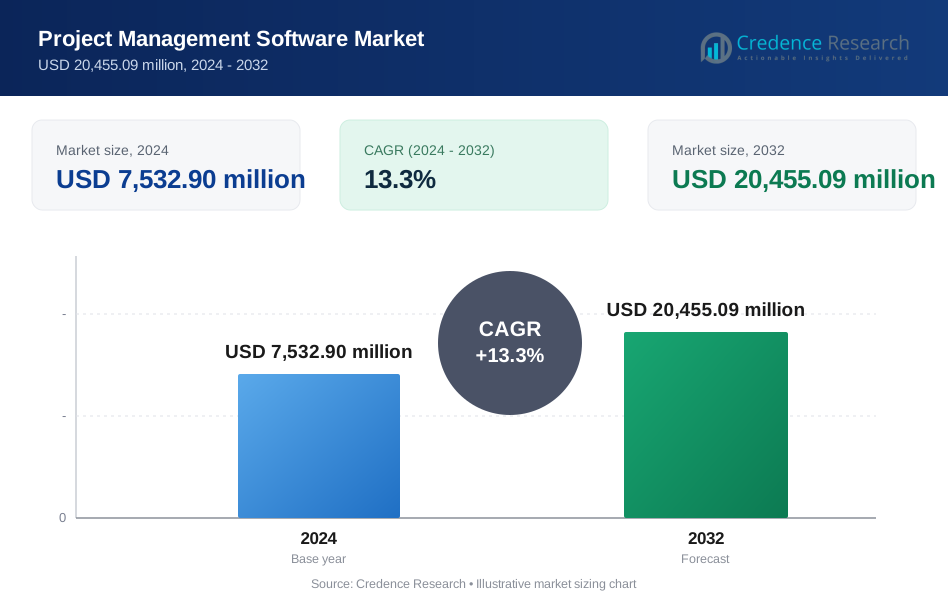
The Project Management Software Market is projected to grow from USD 7,532.90 million in 2024 to an estimated USD 20455.09 million by 2032, with a compound annual growth rate (CAGR) of 13.3% from 2024 to 2032.
Several factors are driving the demand for project management software. The growing need for businesses to manage complex projects, often with distributed teams, has created a surge in demand for tools that facilitate real-time collaboration, resource allocation, and project tracking. Additionally, the move towards remote and hybrid work models has necessitated the adoption of cloud-based project management solutions, which enable flexibility and real-time data sharing. The rise in small and medium-sized enterprises (SMEs) looking to adopt digital solutions for project management also serves as a significant growth driver. Furthermore, increasing investments in automation and AI technologies are enhancing the software’s ability to predict project risks, optimize workflows, and improve decision-making.
In terms of regional analysis, North America holds the largest market share due to the widespread adoption of project management software across various industries such as IT, healthcare, and construction. The Asia Pacific region, however, is expected to witness the highest growth during the forecast period, driven by the digital transformation in countries like India, China, and Japan. The increasing number of businesses in emerging economies and the growing demand for cloud solutions in these regions contribute to this growth. Additionally, the region's focus on enhancing productivity and efficiency in manufacturing, IT, and telecom sectors through advanced project management tools is a significant factor. The integration of AI and machine learning into these software solutions is also anticipated to drive market expansion by offering predictive analytics and intelligent automation, thereby improving project outcomes and operational efficiencies.
Market Drivers:
Growing Need for Efficient Project Management
The increasing complexity of projects across industries has created a rising demand for robust project management software solutions. Companies are looking for efficient tools to manage timelines, allocate resources, and track progress in real-time. With the rising number of multi-phase projects, organizations require software that can streamline communication, manage budgets, and mitigate risks effectively. For instance, in the construction sector, Primavera P6 is extensively used for project scheduling, while in the IT sector, JIRA is favored for agile project management. This demand is particularly prevalent in sectors such as construction, IT, and healthcare, where project management software plays a pivotal role in ensuring seamless execution.
Remote and Hybrid Work Model Adoption
The global shift towards remote and hybrid work models, accelerated by the COVID-19 pandemic, has significantly influenced the project management software market. As businesses adopt flexible work environments, the need for cloud-based tools that enable collaboration among geographically dispersed teams has grown. For instance, Asana and Trello are popular choices for project management in remote and hybrid settings. Project management software enables seamless communication, file sharing, and progress tracking, allowing teams to collaborate in real-time despite physical distances. This shift to remote and hybrid models has made cloud-based project management solutions increasingly essential for modern businesses.
Integration of Artificial Intelligence and Automation
The incorporation of artificial intelligence (AI) and automation technologies into project management software has been a key driver of growth in the market. AI-enabled project management tools can predict potential project risks, optimize resource allocation, and improve decision-making processes. For instance, Wrike uses AI to enhance project planning and risk management, while Click Up leverages automation to streamline task management. Automation within these platforms helps reduce manual effort by automating routine tasks, thus enhancing productivity and reducing human errors. As AI technology continues to advance, its integration into project management software will further revolutionize the market.
Increasing Demand from Small and Medium-Sized Enterprises (SMEs)
The growing demand for digital solutions among small and medium-sized enterprises (SMEs) is another significant driver for the project management software market. SMEs, recognizing the value of streamlined project management, are increasingly adopting affordable and scalable software solutions to enhance efficiency and maintain competitiveness. For instance, Monday.com is widely used by SMEs for its user-friendly interface and scalability, while Zoho Projects is popular for its affordability and comprehensive features. This trend is accelerating as these businesses look for tools that can help them optimize operations without significant overhead costs.
Market Trends:
Cloud-Based Project Management Solutions
One of the most prominent trends in the project management software market is the growing adoption of cloud-based solutions. As organizations shift towards remote and hybrid work environments, the demand for accessible, real-time collaboration tools has surged. For instance, Asana and Trello are widely used cloud-based project management platforms that allow teams to work seamlessly from any location, eliminating the need for expensive on-premises infrastructure. Cloud-based project management platforms allow teams to work seamlessly from any location, eliminating the need for expensive on-premises infrastructure. These solutions offer scalability, flexibility, and enhanced security, making them increasingly popular among businesses of all sizes.
Integration of Artificial Intelligence and Machine Learning
Another key trend is the integration of artificial intelligence (AI) and machine learning (ML) into project management software. These advanced technologies are transforming how businesses plan and execute projects. For instance, Monday.com uses AI to predict potential risks and automate repetitive tasks, while Wrike provides valuable insights for decision-making using machine learning algorithms. AI-enabled platforms can predict potential risks, automate repetitive tasks, and provide valuable insights for decision-making. Machine learning algorithms analyze historical data to improve project forecasting and resource allocation, enhancing efficiency and reducing errors. This trend reflects the broader push for more intelligent, data-driven solutions across industries.
Mobile Accessibility and User-Centric Design
With the increasing reliance on mobile devices, project management software is becoming more mobile-friendly, offering apps for smartphones and tablets. This trend enables teams to stay connected and access critical project data on the go, increasing productivity and responsiveness. For instance, Smartsheet and Microsoft Project offer mobile apps that enable teams to stay connected and access critical project data on the go, increasing productivity and responsiveness. Alongside this, there is a growing emphasis on user-centric design, making software more intuitive and easier to use. Simplified interfaces, customizable dashboards, and enhanced user experiences are becoming essential features for project management tools, enabling faster adoption across organizations.
Focus on Collaboration and Communication Features
As teams become more geographically dispersed, there is a heightened focus on improving collaboration and communication within project management software. Modern tools integrate features like real-time chat, file sharing, and video conferencing to facilitate seamless communication. For instance, Slack and Microsoft Teams are popular platforms that ensure all team members, regardless of location, can work together efficiently and stay aligned on project goals. These features ensure that all team members, regardless of location, can work together efficiently and stay aligned on project goals. This trend reflects the increasing need for cohesive collaboration in today’s fast-paced, globalized business environment.
Market Challenges Analysis:
High Implementation Costs
One of the key challenges facing the project management software market is the high implementation costs associated with adopting these solutions. Many businesses, especially small and medium-sized enterprises (SMEs), may find the initial investment in software, along with the costs of integration and training, prohibitive. Even though cloud-based solutions have reduced upfront costs, the complexity of implementation-especially for large organizations with established systems-can still pose a significant barrier. This challenge can limit the market’s reach, particularly in cost-sensitive industries and regions. As project management software increasingly moves to cloud-based platforms, data security and privacy have become critical concerns for organizations. Sensitive project information and intellectual property are stored and shared online, raising risks of data breaches, cyberattacks, and unauthorized access. While cloud service providers invest heavily in security measures, businesses remain cautious about entrusting their data to third-party platforms. The growing emphasis on cybersecurity and compliance with regulations such as GDPR further complicates the adoption process for organizations, especially in highly regulated industries.
Integration with Existing Systems
Another challenge is the seamless integration of project management software with existing enterprise systems, such as Enterprise Resource Planning (ERP) and Customer Relationship Management (CRM) tools. Many businesses rely on a variety of software applications, and integrating a new project management solution into this ecosystem can be complex and time-consuming. Poor integration can lead to inefficiencies, data silos, and disruptions in workflow, ultimately hindering the software's potential benefits. The need for compatibility with diverse software environments presents a significant challenge for vendors and customers alike. Many organizations face internal resistance when it comes to adopting new software solutions. Employees and managers accustomed to traditional project management methods may be hesitant to embrace new technologies, leading to low adoption rates. Training and change management initiatives are often required to ensure that teams are fully onboard with new tools. Overcoming organizational inertia and fostering a culture of innovation is crucial for the successful implementation of project management software.
Market Segmentation Analysis:
By Component
The market is divided into two primary components: software and services. The software segment includes tools used for project planning, scheduling, budgeting, and collaboration, while the services segment comprises implementation, training, and support services. The demand for both components is increasing as businesses look for comprehensive solutions that combine advanced software with expert support.
By Solution
Project management software solutions are typically classified into various types, such as task management, project scheduling, resource management, and collaboration tools. The task management and scheduling solutions are particularly sought after due to the need for effective timeline management, whereas resource management solutions help optimize human and material resources across multiple projects.
By Services
Services related to project management software include consulting, integration, and managed services. Consulting services help businesses select and implement the right software solution, while integration services ensure that the software integrates seamlessly with existing enterprise systems. Managed services are increasingly in demand for ongoing support and maintenance.
By Deployment
Deployment models are typically classified as cloud-based and on-premises. Cloud-based solutions are growing in popularity due to their scalability, flexibility, and lower upfront costs, making them the preferred option for most organizations. However, on-premises deployments remain relevant for businesses that require greater control over data and infrastructure.
By End User
Key end users of project management software include industries such as IT, construction, healthcare, and manufacturing, with IT and construction sectors showing the highest adoption rates.
Segmentations:
By Component:
- Software
- Services
By Solution:
- Task Management
- Project Scheduling
- Resource Management
- Collaboration Tools
By Services:
- Consulting
- Integration
- Managed Services
By Deployment:
- Cloud-Based
- On-Premises
By End User:
- IT
- Construction
- Healthcare
- Manufacturing
By Region:
- North America
- U.S.
- Canada
- Mexico
- Europe
- Germany
- France
- U.K.
- Italy
- Spain
- Rest of Europe
- Asia Pacific
- China
- Japan
- India
- South Korea
- South-east Asia
- Rest of Asia Pacific
- Latin America
- Brazil
- Argentina
- Rest of Latin America
- Middle East & Africa
- GCC Countries
- South Africa
- Rest of the Middle East and Africa
Regional Analysis:
North America
North America leads the global project management software market with a 38% market share. This dominance is attributed to high technological adoption, a strong IT infrastructure, and significant demand for digital solutions across industries such as IT, construction, and healthcare. The United States, in particular, is a major contributor, with rapid adoption of cloud-based project management tools, AI integration, and automation. North America’s emphasis on real-time collaboration, resource optimization, and digital transformation continues to drive market growth.
Europe
Europe holds a 30% market share in the global project management software market. The demand in the region is driven by increasing investments in digital transformation strategies by both large enterprises and small-to-medium-sized enterprises (SMEs). Countries like the UK, Germany, and France are leading this growth through the adoption of cloud-based solutions and AI-powered project management tools. Additionally, industries with strict regulatory requirements, such as healthcare and finance, rely on secure and efficient project management solutions. The shift towards remote work further enhances the adoption of project management software.
Asia Pacific
Asia Pacific accounts for 22% of the global market share and is expected to experience the highest growth rate. Rapid digitalization in emerging markets such as China, India, and Japan are fueling this growth. The increasing adoption of cloud-based project management tools by SMEs, along with government initiatives promoting digital innovation, is driving demand. The region's significant infrastructure and construction projects further contribute to market expansion as businesses seek efficient tools for managing large-scale projects.
Latin America
Latin America holds 7% of the global project management software market share. Growth in this region is largely driven by the increasing adoption of digital solutions by SMEs in countries like Brazil, Mexico, and Argentina. As businesses embrace cost-effective, scalable project management tools, the demand for these solutions is rising. Additionally, the region’s expanding infrastructure and manufacturing sectors further contribute to the market’s growth.
Middle East & Africa
The Middle East & Africa holds 3% of the global market share. While smaller in comparison to other regions, the market is growing due to increased adoption of project management software in industries such as construction, oil and gas, and IT. Countries like the UAE, Saudi Arabia, and South Africa are seeing significant investments in digital tools to improve project efficiency and meet deadlines. As the region continues to modernize its industries, demand for project management solutions is expected to rise.
Key Player Analysis:
- Adobe Inc.
- Atlassian Corporation Plc
- Broadcom Inc.
- Microsoft Corporation
- Oracle Corporation
- Plainview, Inc.
- Planisware
- SAP SE
- ServiceNow
- Zoho Corporation Pvt. Ltd.
Competitive Analysis:
The project management software market is highly competitive, with numerous players offering a wide range of solutions to cater to different business needs. Key market leaders include well-established companies such as Microsoft, Oracle, and Atlassian, which dominate with comprehensive software suites like Microsoft Project, Oracle Primavera, and Jira. These vendors are known for their extensive feature sets, scalability, and integration capabilities. For instance, Microsoft Project is widely used in large-scale construction projects due to its robust scheduling and resource management features. In addition to these giants, numerous smaller, innovative players are emerging, offering specialized solutions that cater to specific industries or smaller businesses. These companies, such as Asana, Monday.com, and Trello, focus on user-friendly interfaces, affordable pricing models, and cloud-based solutions, gaining traction particularly among SMEs and remote teams. The competitive landscape is further shaped by continuous product innovations, particularly the integration of AI, machine learning, and automation to enhance project management efficiency. As businesses prioritize ease of use, customization, and scalability, competition in this market remains fierce.
Recent Developments:
- In August 2024, Broadcom unveiled an on-premises edition of its Rally project management application at the VMware Explore conference. This edition provides organizations with more control over their data storage, particularly beneficial for those in regulated industries.
- In October 2023, Broadcom integrated its Rally software with Clarity, enhancing visibility into project management processes and enabling better alignment with business objectives through value stream management.
- In November 2023, Microsoft Project introduced new collaborative features that integrate with Microsoft Teams, allowing team members to update tasks simultaneously and improve overall project communication.
Market Concentration & Characteristics:
The project management software market exhibits moderate concentration, with several large players commanding significant market share, such as Microsoft, Oracle, and Atlassian. These established vendors offer comprehensive solutions that cater to a wide range of industries, ensuring their dominance in the market. However, the market also sees a high level of fragmentation, with numerous smaller, specialized vendors targeting niche segments and SMEs. Companies like Asana, Monday.com, and Trello have carved out substantial market positions by focusing on user-friendly interfaces, cloud-based solutions, and competitive pricing. The market is characterized by rapid innovation, as vendors continuously enhance their offerings with new features, particularly in automation, AI, and machine learning, to meet the evolving demands of businesses. With increasing adoption of cloud solutions, a shift toward mobile compatibility, and growing demand for scalability and customization, the project management software market is highly dynamic and competitive.
Report Coverage:
The research report offers an in-depth analysis based on component, solution, services, deployment, end-user and region. It details leading market players, providing an overview of their business, product offerings, investments, revenue streams, and key applications. Additionally, the report includes insights into the competitive environment, SWOT analysis, current market trends, as well as the primary drivers and constraints. Furthermore, it discusses various factors that have driven market expansion in recent years. The report also explores market dynamics, regulatory scenarios, and technological advancements that are shaping the industry. It assesses the impact of external factors and global economic changes on market growth. Lastly, it provides strategic recommendations for new entrants and established companies to navigate the complexities of the market.
Future Outlook:
- The increasing adoption of cloud-based solutions will continue to drive the growth of the project management software market.
- AI and machine learning integration will play a significant role in enhancing project forecasting, risk management, and automation of repetitive tasks.
- The demand for mobile-friendly project management tools will rise as more businesses embrace remote and hybrid work environments.
- Customizable and scalable project management solutions will become increasingly essential to meet the diverse needs of businesses, especially SMEs.
- As businesses expand globally, the need for real-time collaboration tools will grow, encouraging the development of advanced communication features within project management software.
- Data security and privacy concerns will prompt vendors to strengthen their software’s cybersecurity measures, ensuring compliance with industry regulations.
- The rise of digital transformation initiatives across industries will push the demand for advanced project management solutions that integrate with other enterprise systems, such as ERP and CRM.
- Growing demand for industry-specific project management solutions will lead to the emergence of specialized software catering to sectors like construction, healthcare, and IT.
- The increasing focus on project portfolio management (PPM) solutions will drive innovations to help businesses align projects with overall strategic goals.
- Competitive pricing models, along with the rise of subscription-based models, will make project management software more accessible to businesses of all sizes.
Request a Free Sample
Fill in your details and we'll send you a free sample report.
- Sample data tables & charts
- Research methodology
Market Dynamics
Growing Need for Efficient Project Management
As projects become more complex and multi-phased across industries like IT, construction, and healthcare, organizations require robust software to manage timelines, resources, and budgets, driving adoption of project management solutions.
Remote and Hybrid Work Model Adoption
The shift to remote and hybrid work, accelerated by the COVID-19 pandemic, has increased demand for cloud-based project management tools that enable real-time collaboration and communication among distributed teams.
Integration of Artificial Intelligence and Automation
AI and automation are being embedded into project management software, enabling predictive analytics, risk identification, and workflow optimization, which enhances productivity and decision-making for businesses.
Increasing Demand from Small and Medium-Sized Enterprises (SMEs)
SMEs are increasingly adopting affordable, scalable project management software to streamline operations, improve efficiency, and remain competitive, fueling market growth especially in emerging economies.
Digital Transformation Initiatives
Organizations across sectors are investing in digital transformation, seeking project management solutions that integrate with other enterprise systems (like ERP and CRM) to improve operational efficiency and strategic alignment.
Need a Custom Version of This Report?
Tailor the scope, geography, or segments to your exact requirements.
- Custom geography or segment scope
- Direct access to our analyst team
Frequently Asked Questions
What is the projected growth of the Project Management Software Market?
What factors are driving the demand for project management software?
Which region holds the largest market share for project management software?
Which region is expected to see the highest growth in the project management software market?
Why are cloud-based project management solutions becoming more popular?
Table of Content
Chapter 1 Market Segmentation
- 1.1 Segmentation Framework
- 1.1.1 Product and Service Classification
- 1.1.2 Application and End-Use Classification
- 1.1.3 Technology and Solution Classification
- 1.1.4 Customer and Distribution Channel Classification
- 1.1.5 Geographic Segmentation
- 1.1.6 Market Segment Definitions and Boundaries
- 1.2 By End User
- 1.2.1 IT
- 1.2.2 Construction
- 1.2.3 Healthcare
- 1.2.4 Manufacturing
- 1.3 By Solution
- 1.3.1 Task Management
- 1.3.2 Project Scheduling
- 1.3.3 Resource Management
- 1.3.4 Collaboration Tools
- 1.4 By Component
- 1.4.1 Software
- 1.4.2 Services
- 1.5 By Deployment
- 1.5.1 Cloud-Based
- 1.5.2 On-Premises
Chapter 2 Introduction
- 2.1 Report Objectives and Scope
- 2.2 Product Definition and Industry Terminology
- 2.3 Market Inclusions and Exclusions
- 2.4 Research Process
- 2.4.1 Primary Research and Expert Interviews
- 2.4.2 Secondary Research and Source Review
- 2.4.3 Top-Down and Bottom-Up Estimation
- 2.4.4 Data Triangulation and Verification
- 2.5 Market Size Measurement Basis
- 2.5.1 2024: USD 7,532.90 million → 2032: USD 20,455.09 million
- 2.6 Historical and Forecast Reference Periods
- 2.6.1 Base Year: 2024
- 2.6.2 Forecast Period: 2024-2032
- 2.7 Research Assumptions and Limitations
Chapter 3 Executive Summary
- 3.1 Market Snapshot and Key Findings
- 3.2 Base-Year Market Size, 2024
- 3.3 Forecast Market Size, 2032
- 3.4 Revenue and Volume Growth Outlook
- 3.5 Key Demand and Supply Indicators
- 3.6 Leading Market Segments
- 3.7 Fastest-Growing Market Opportunities
- 3.8 Regional Performance Highlights
- 3.9 Technology and Industry Transformation
- 3.10 Competitive Landscape Summary
- 3.11 Analyst View and Strategic Implications
Chapter 4 Global Project Management Software Market Trends and Developments
- 4.1 Historical Industry Development
- 4.2 Recent Market Trends and Developments
- 4.3 Demand and Customer Behavior Trends
- 4.4 Technology and Product Innovation
- 4.5 Artificial Intelligence, Automation and Digitalization
- 4.6 Local Manufacturing and Supply Chain Realignment
- 4.7 Industry Partnerships, Mergers and Acquisitions
- 4.8 Sustainability and Circular Economy Developments
- 4.9 Government and Private Sector Investment Trends
- 4.10 Emerging Business Models and Commercialization
- 4.11 Industry Developments and Announcements
Chapter 5 Global Project Management Software Market Supply and Demand Analysis
- 5.1 Demand Trend and Consumption Analysis
- 5.2 Demand Forecast, 2024-2032
- 5.3 Supply Chain Structure and Procurement Trends
- 5.4 Supply-Demand Gap and Bottlenecks
- 5.5 Import Dependence and Sourcing Structure
- 5.6 Regional Supply and Demand Concentration
Chapter 6 Global Project Management Software Market Pricing Analysis
- 6.1 Pricing Structure and Measurement
- 6.2 Historical Pricing Trends
- 6.3 Pricing Outlook, 2024-2032
- 6.4 Pricing by Product and Market Segment
- 6.5 Geographic Pricing Differences
- 6.6 Key Input, Energy, Labor and Logistics Costs
- 6.7 Contract Pricing and Purchasing Models
- 6.8 Pricing Sensitivity and Competitive Positioning
- 6.9 Price, Margin and Profitability Implications
Chapter 7 Global Project Management Software Market Dynamics
- 7.1 Market Growth Drivers
- 7.1.1 Demand-Side Drivers
- 7.1.2 Technology and Innovation Drivers
- 7.1.3 Infrastructure and Investment Drivers
- 7.1.4 Regulatory and Policy Drivers
- 7.2 Market Restraints
- 7.2.1 Cost and Affordability Constraints
- 7.2.2 Technology and Adoption Barriers
- 7.2.3 Supply Chain and Operational Constraints
- 7.3 Market Challenges
- 7.3.1 Competitive Pressure and Margin Erosion
- 7.3.2 Skills, Infrastructure and Implementation Gaps
- 7.4 Emerging Market Opportunities
- 7.5 Market Dynamics Impact and Time-Horizon Assessment
Chapter 8 Global Project Management Software Value Chain Analysis
- 8.1 Industry Value Chain Overview
- 8.2 Upstream Suppliers and Critical Inputs
- 8.3 Technology and Component Providers
- 8.4 Manufacturing or Service Delivery
- 8.5 Distribution, Channel Partners and Integrators
- 8.6 Downstream Applications and End Users
- 8.7 Value Addition and Profit Pools
- 8.8 Vertical Integration and Outsourcing
- 8.9 Supplier Concentration and Risk
- 8.10 Supply Chain Localization and Resilience
Chapter 9 Global Project Management Software Market Regulations and Policies
- 9.1 Relevant Laws, Standards and Compliance Frameworks
- 9.2 Product, Service, Safety and Quality Requirements
- 9.3 Government Policies, Incentives and Subsidies
- 9.4 Imports, Exports and Trade Barriers
- 9.5 Public Procurement and Local Content Requirements
- 9.6 Data Protection, AI and Cybersecurity Compliance
- 9.7 Upcoming Policy Changes and Market Implications
Chapter 10 Global Project Management Software Market Hotspots and Opportunities
- 10.1 Market Opportunity Mapping and Growth Hotspots
- 10.2 High-Growth Applications and Customer Groups
- 10.3 Underserved Markets and White-Space Opportunities
- 10.4 Emerging Technology and Product Opportunities
- 10.5 New Capacity and Investment Hotspots
- 10.6 Market Entry and Expansion Opportunities
- 10.7 Distribution and Partnership Opportunities
- 10.8 Near-Term and Long-Term Commercial Potential
- 10.9 Opportunity Attractiveness and Execution Risks
Chapter 11 Global Project Management Software Market Outlook, 2024-2032
- 11.1 Market Size and Analysis
- 11.1.1 Revenue (Market Measurement: 2024: USD 7,532.90 million → 2032: USD 20,455.09 million)
- 11.1.2 Historical Market Size
- 11.1.3 Base-Year Market Size, 2024
- 11.2 Market Forecast, 2024-2032
- 11.2.1 Revenue Forecast to 2032
- 11.2.2 CAGR and Year-on-Year Growth
- 11.2.3 Incremental Revenue Opportunity
- 11.3 Forecast Assumptions and Scenario Analysis
- 11.3.1 Base-Case Forecast
- 11.3.2 Optimistic and Conservative Scenarios
- 11.3.3 Technology, Pricing and Policy Sensitivities
- 11.4 Market Attractiveness and Growth Outlook
Chapter 12 Global Project Management Software Market Segmentation and Outlook
- 12.1 Segmentation Summary and Market Shares, 2024
- 12.2 Largest and Fastest-Growing Segments
- 12.3 By End User - Market Size and Forecast, 2024-2032
- 12.3.1 Segment Definition and Scope
- 12.3.2 Historical Market Size
- 12.3.3 Revenue Forecast, 2024-2032
- 12.3.4 Base-Year Market Share, 2024
- 12.3.5 Segment CAGR and Growth Drivers
- 12.3.6 Subsegment Market Size and Forecast
- 12.3.6.1 IT
- 12.3.6.2 Construction
- 12.3.6.3 Healthcare
- 12.3.6.4 Manufacturing
- 12.3.7 Subsegment Pricing and Adoption Trends
- 12.3.8 Leading Suppliers and Competition
- 12.3.9 Regional Demand and Opportunities
- 12.4 By Solution - Market Size and Forecast, 2024-2032
- 12.4.1 Segment Definition and Scope
- 12.4.2 Historical Market Size
- 12.4.3 Revenue Forecast, 2024-2032
- 12.4.4 Base-Year Market Share, 2024
- 12.4.5 Segment CAGR and Growth Drivers
- 12.4.6 Subsegment Market Size and Forecast
- 12.4.6.1 Task Management
- 12.4.6.2 Project Scheduling
- 12.4.6.3 Resource Management
- 12.4.6.4 Collaboration Tools
- 12.4.7 Subsegment Pricing and Adoption Trends
- 12.4.8 Leading Suppliers and Competition
- 12.4.9 Regional Demand and Opportunities
- 12.5 By Component - Market Size and Forecast, 2024-2032
- 12.5.1 Segment Definition and Scope
- 12.5.2 Historical Market Size
- 12.5.3 Revenue Forecast, 2024-2032
- 12.5.4 Base-Year Market Share, 2024
- 12.5.5 Segment CAGR and Growth Drivers
- 12.5.6 Subsegment Market Size and Forecast
- 12.5.6.1 Software
- 12.5.6.2 Services
- 12.5.7 Subsegment Pricing and Adoption Trends
- 12.5.8 Leading Suppliers and Competition
- 12.5.9 Regional Demand and Opportunities
- 12.6 By Deployment - Market Size and Forecast, 2024-2032
- 12.6.1 Segment Definition and Scope
- 12.6.2 Historical Market Size
- 12.6.3 Revenue Forecast, 2024-2032
- 12.6.4 Base-Year Market Share, 2024
- 12.6.5 Segment CAGR and Growth Drivers
- 12.6.6 Subsegment Market Size and Forecast
- 12.6.6.1 Cloud-Based
- 12.6.6.2 On-Premises
- 12.6.7 Subsegment Pricing and Adoption Trends
- 12.6.8 Leading Suppliers and Competition
- 12.6.9 Regional Demand and Opportunities
- 12.7 Segment Growth Comparison
- 12.8 Segment Attractiveness and Priority Matrix
Chapter 13 Global Project Management Software End-Use and Application Market Outlook
- 13.1 End-Use Industry and Customer Demand Structure
- 13.2 Leading Applications and Customer Groups
- 13.3 End-Use Market Size, Share and Forecast
- 13.4 Major End-Use Industry Deep Dives
- 13.4.1 Customer Requirements and Use Cases
- 13.4.2 Demand and Replacement Cycles
- 13.4.3 Technical and Regulatory Considerations
- 13.4.4 Purchasing and Procurement Models
- 13.4.5 Leading Vendors and Distribution Channels
- 13.4.6 Forecast and Commercial Opportunities
- 13.5 Emerging Applications and Cross-Segment Demand
- 13.6 End-Use Industry Investment Priorities
Chapter 14 Global Project Management Software Geographic Market Outlook, 2024-2032
- 14.1 Regional Market Size and Share, 2024
- 14.2 Regional Market Forecast, 2024-2032
- 14.3 Regional Pricing, Production and Demand Differences
- 14.4 North America
- 14.4.1 United States
- 14.4.2 Canada
- 14.4.3 Mexico
- 14.5 Europe
- 14.5.1 Germany
- 14.5.2 France
- 14.5.3 Italy
- 14.5.4 United Kingdom
- 14.5.5 Spain
- 14.5.6 Poland
- 14.5.7 Russia
- 14.5.8 Netherlands
- 14.5.9 Belgium
- 14.5.10 Sweden
- 14.5.11 Denmark
- 14.5.12 Norway
- 14.5.13 Rest of Europe
- 14.6 Asia Pacific
- 14.6.1 China
- 14.6.2 India
- 14.6.3 Japan
- 14.6.4 South Korea
- 14.6.5 Thailand
- 14.6.6 Indonesia
- 14.6.7 Vietnam
- 14.6.8 Malaysia
- 14.6.9 Australia
- 14.6.10 Rest of Asia Pacific
- 14.7 Latin America
- 14.7.1 Brazil
- 14.7.2 Argentina
- 14.7.3 Colombia
- 14.7.4 Chile
- 14.7.5 Rest of Latin America
- 14.8 Middle East
- 14.8.1 Saudi Arabia
- 14.8.2 United Arab Emirates
- 14.8.3 Turkey
- 14.8.4 Israel
- 14.8.5 Iran
- 14.8.6 Rest of the Middle East
- 14.9 Africa
- 14.9.1 South Africa
- 14.9.2 Egypt
- 14.9.3 Nigeria
- 14.9.4 Morocco
- 14.9.5 Rest of Africa
- 14.10 Regional Investment, Policy and Supply Chain Differences
- 14.11 Regional Competitive Landscape
- 14.12 Geographic Growth Hotspots
Chapter 15 Global Project Management Software Technology, Innovation and Sustainability Outlook
- 15.1 Technology Landscape and Maturity
- 15.2 Product, Process and Service Innovation
- 15.3 AI, Automation and Digital Tools in the Industry
- 15.4 Technology Adoption and Performance Benchmarking
- 15.5 Innovation Pipeline and R&D Investment
- 15.6 Patent and Intellectual Property Trends
- 15.7 Energy Efficiency and Resource Management
- 15.8 Sustainability, Recycling and Circularity
- 15.9 Technology Roadmap, 2024-2032
- 15.10 Risks of Obsolescence and Technology Substitution
Chapter 16 Global Project Management Software Market Key Strategic Imperatives
- 16.1 Growth and Market Entry Priorities
- 16.2 High-Return Products and Segments
- 16.3 Pricing, Profitability and Cost Optimization
- 16.4 Technology Investment and Product Differentiation
- 16.5 Supply Chain Localization and Resilience
- 16.6 Distribution and Customer Acquisition
- 16.7 Partnership, Acquisition and Capacity Strategy
- 16.8 Regional Expansion Priorities
- 16.9 Short-, Medium- and Long-Term Actions
Chapter 17 Competition Outlook
- 17.1 Industry Competition Characteristics
- 17.2 Market Structure and Concentration
- 17.3 Market Share and Competitive Positioning, 2024
- 17.4 Company-Wise Revenue and Product Benchmarking
- 17.5 Production and Service Capacity Benchmarking
- 17.6 Technology, Pricing and Differentiation
- 17.7 Regional Footprint and Distribution Strength
- 17.8 Mergers, Acquisitions and Strategic Alliances
- 17.9 New Entrants and Competitive Threats
- 17.10 Porter's Five Forces and Industry Attractiveness
- 17.11 Competitive Outlook, 2024-2032
Chapter 18 Company Profiles
- 18.1 Company Coverage and Selection Criteria
- 18.2 Microsoft Corporation
- 18.2.1 Business Description
- 18.2.2 Company Ownership and Geographic Presence
- 18.2.3 Product and Service Portfolio
- 18.2.4 Manufacturing and Operating Footprint
- 18.2.5 Financial Performance and Investment
- 18.2.6 Market Share and Competitive Position
- 18.2.7 Technology and Innovation Capabilities
- 18.2.8 Strategic Alliances or Partnerships
- 18.2.9 Recent Developments
- 18.2.10 Growth Strategy and Outlook
- 18.3 Oracle Corporation
- 18.4 Atlassian Corporation Plc
- 18.5 SAP SE
- 18.6 Broadcom Inc.
- 18.7 Adobe Inc.
- 18.8 Planisware
- 18.9 ServiceNow
- 18.10 Zoho Corporation Pvt. Ltd.
- 18.11 Plainview, Inc.
- 18.12 Other Relevant Market Participants
Note: Every listed company is profiled on the structure shown under the first company. The company list is preliminary and may change based on research findings, market developments, data availability and client requirements.
Chapter 19 Disclaimer
- 19.1 Research and Forecast Disclaimer
- 19.2 Data Source and Estimation Limitations
Note: The depth of individual sections depends on data availability for this market. Volume, capacity, trade and other unit-based metrics are included where applicable.

