
| REPORT ATTRIBUTE | DETAILS |
|---|---|
| Historical Period | 2020-2023 |
| Base Year | 2024 |
| Forecast Period | 2025-2032 |
| Industrial Hemp Market Size 2023 | USD 7,987.24 Million |
| Industrial Hemp Market, CAGR | 21.7% |
| Industrial Hemp Market Size 2032 | USD 46,774.80 Million |
Market Overview
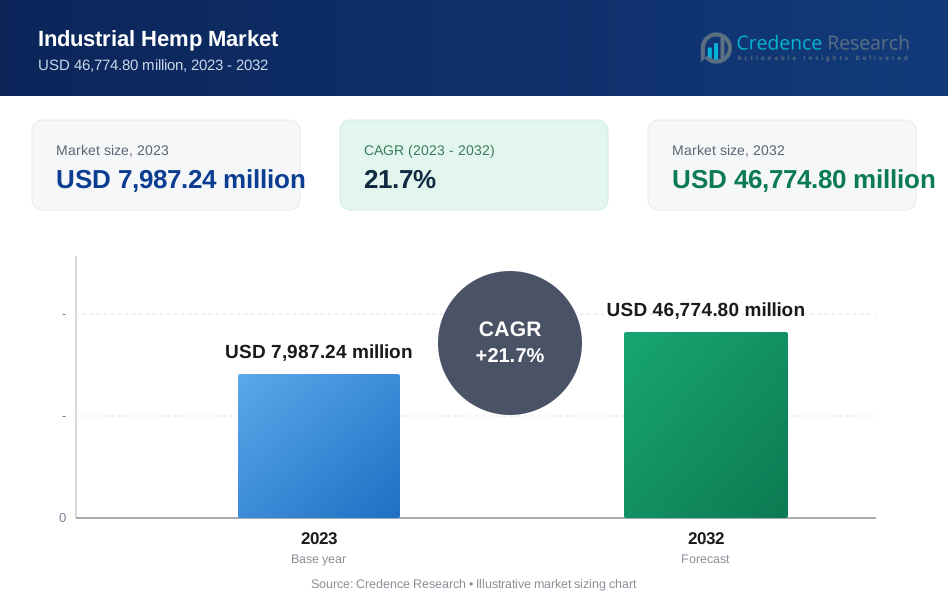
Global Industrial Hemp Market size was valued at USD 7,987.24 million in 2023 and is anticipated to reach USD 46,774.80 million by 2032, at a CAGR of 21.7% during the forecast period (2023-2032).
The global industrial hemp market is experiencing substantial growth, driven by rising demand for sustainable raw materials across various industries, including textiles, bioplastics, construction, and personal care. Governments worldwide are easing regulations surrounding hemp cultivation and processing, further supporting market expansion. The crop's versatility, fast growth cycle, and minimal need for pesticides make it an eco-friendly alternative to conventional materials. Additionally, growing consumer awareness of plant-based and organic products is boosting demand for hemp-derived food, beverages, and supplements. Technological advancements in hemp processing and product development are also enabling manufacturers to explore innovative applications. Furthermore, the increasing use of cannabidiol (CBD) in wellness and pharmaceutical products has opened new revenue streams for hemp producers. Market players are strategically investing in research and development to enhance product quality and production efficiency. These drivers, coupled with favorable policy frameworks and shifting consumer preferences, continue to shape a promising outlook for the global industrial hemp market.
The global industrial hemp market is experiencing significant growth across various regions, with North America and Europe leading the way in cultivation and product development. North America, particularly the United States and Canada, has seen a surge in hemp farming, driven by favorable regulations and growing consumer demand for hemp-derived products. Europe follows closely, with countries like France, Germany, and the Netherlands investing heavily in hemp cultivation and processing. The Asia-Pacific region, particularly China and India, is also emerging as a key player, focusing on hemp fiber and textile production. Key players in the market include GenCanna, Canopy Growth Corporation, Curaleaf Holdings, AURORA CANNABIS INC., and HempFlax Group B.V. These companies are at the forefront of innovation, product diversification, and expansion into new markets, contributing to the ongoing evolution of the industrial hemp sector globally.
Market Insights
- The global industrial hemp market was valued at USD 7,987.24 million in 2023 and is expected to reach USD 46,774.80 million by 2032, growing at a CAGR of 21.7% from 2023 to 2032.
- Increasing demand for sustainable and eco-friendly products is driving market growth, particularly in sectors like textiles, construction materials, and personal care.
- The rising use of hemp in food, beverages, and pharmaceuticals, especially hemp-derived CBD, is a key trend in the market.
- The market is highly competitive with major players like GenCanna, Canopy Growth Corporation, and Curaleaf Holdings, Inc. leading innovation and expanding product offerings.
- Regulatory uncertainty in various regions poses challenges for market growth, limiting investment and expansion opportunities.
- North America and Europe dominate the market, but Asia-Pacific is expected to witness rapid growth due to evolving regulations.
- Ongoing advancements in hemp cultivation and processing technologies are expected to enhance market efficiency and sustainability.
Report Scope
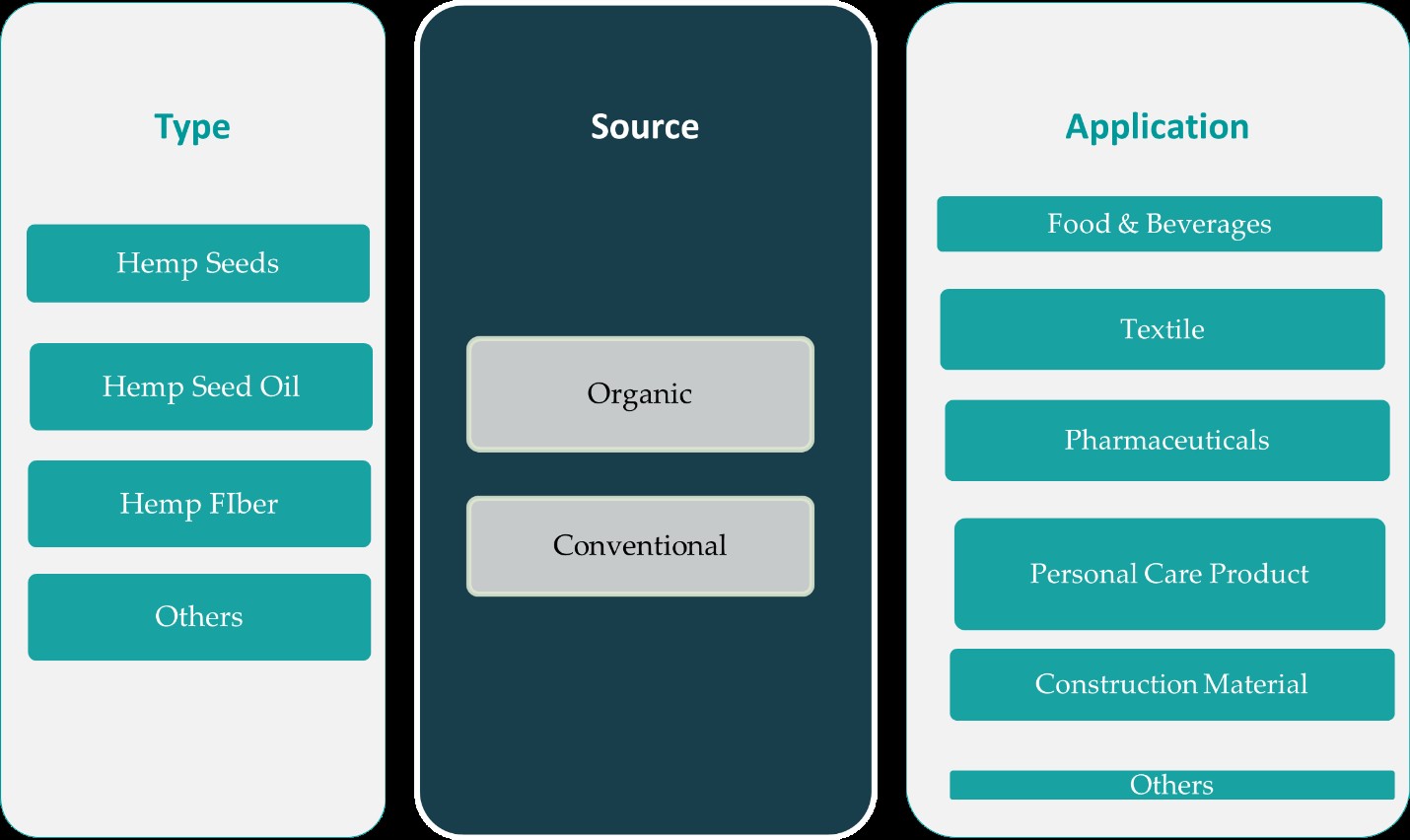
This report segments the Global Industrial Hemp Market as follows:
Market Drivers
Growing Demand for Sustainable and Eco-Friendly Raw Materials
The increasing global emphasis on sustainability and environmental preservation is significantly driving the demand for industrial hemp. For instance, a report by the National Hemp Association highlighted that hemp cultivation requires less water, minimal pesticide usage, and contributes to soil regeneration, making it an environmentally responsible choice. These attributes align with the growing consumer and corporate shift toward sustainable sourcing and manufacturing practices. As industries across textiles, construction, automotive, and packaging seek low-impact raw materials, hemp’s ecological benefits are attracting considerable attention. Governments and regulatory bodies are also encouraging the adoption of green alternatives, further accelerating the integration of industrial hemp into global supply chains.
Increasing Legalization and Government Support
The industrial hemp market is witnessing accelerated growth due to the gradual easing of regulations and the legalization of hemp cultivation across several regions. Countries such as the United States, Canada, China, India, and various European nations have revised their agricultural and trade policies to accommodate hemp farming, recognizing its industrial and economic value. These legal reforms have opened new avenues for farmers and enterprises, promoting the crop’s adoption and commercialization. Furthermore, government subsidies, research grants, and pilot projects are encouraging investment in hemp-based ventures. As regulatory clarity improves and international trade barriers ease, stakeholders throughout the value chain-from growers to end-product manufacturers-are increasingly leveraging hemp as a viable and profitable commodity.
Expanding Applications Across Diverse Industries
The versatility of industrial hemp is a key driver of its global market growth. For instance, a report by the National Hemp Association highlighted that hemp seeds, rich in protein and omega fatty acids, are fueling demand in the health food and dietary supplement sectors. In the construction industry, hempcrete is emerging as a durable and thermally efficient material. Meanwhile, the textile sector is embracing hemp fibers for their strength, breathability, and biodegradability. As research and innovation expand the range of hemp-based products, companies are increasingly investing in R&D to capitalize on these opportunities. This cross-sector adoption continues to enhance the commercial value of hemp, reinforcing its position as a high-demand agricultural commodity.
Rising Awareness of Health and Wellness Benefits
Consumer awareness regarding the health benefits of hemp-derived products is playing a crucial role in market expansion. Products such as hemp protein powder, oils, and CBD extracts are gaining popularity for their nutritional, anti-inflammatory, and therapeutic properties. As demand for natural and plant-based supplements grows, hemp is being incorporated into functional foods, beverages, skincare, and wellness products. The CBD segment, in particular, has experienced exponential growth due to its perceived benefits in stress relief, pain management, and overall well-being. Health-conscious consumers and patients seeking alternative remedies are increasingly opting for hemp-based solutions. This rising awareness and acceptance are encouraging retailers and brands to expand their product portfolios, thereby strengthening the global market for industrial hemp.
Market Trends
Surge in Demand for Hemp-Based Food and Beverages
One of the most notable trends in the global industrial hemp market is the rising demand for hemp-based food and beverages. For instance, a report by the National Hemp Association highlighted that hemp seeds, oil, and protein powders are increasingly incorporated into snacks, dairy alternatives, energy bars, and beverages due to their high nutritional value. Rich in essential fatty acids, proteins, and fiber, hemp-derived ingredients are increasingly incorporated into snacks, dairy alternatives, energy bars, and beverages. Manufacturers are leveraging this trend by launching innovative hemp-based food products to meet the growing preferences for clean-label, gluten-free, and organic foods. This shift in dietary habits, coupled with increasing awareness of the functional health benefits of hemp, is creating strong growth opportunities within the food and beverage sector.
Rapid Expansion of the CBD Wellness Market
The growing popularity of cannabidiol (CBD) products continues to shape the industrial hemp market landscape. Consumers across the globe are increasingly turning to CBD-infused wellness products for stress relief, pain management, sleep improvement, and skincare solutions. With favorable regulatory changes and rising acceptance of alternative therapies, the demand for non-psychoactive, hemp-derived CBD products has surged. The beauty and personal care industries are introducing a wide range of CBD-infused serums, creams, and balms, targeting consumers seeking natural and therapeutic skincare solutions. In parallel, pharmaceutical and nutraceutical firms are expanding their CBD portfolios, capitalizing on the growing interest in holistic and plant-based remedies. This trend is likely to remain a pivotal driver of market growth in the coming years.
Technological Advancements in Hemp Processing
Innovations in processing technologies are enabling higher efficiency and broader application of industrial hemp. New methods in fiber decortication, oil extraction, and seed processing have enhanced product quality and scalability for manufacturers. These technological advancements are reducing production costs and increasing the viability of hemp in mainstream industrial applications such as bioplastics, textiles, insulation, and composites. Moreover, automated and eco-friendly processing equipment is helping producers meet environmental regulations while improving output. The increasing integration of technology in hemp cultivation and processing is expected to accelerate market maturity, drive competitive pricing, and foster product innovation across diverse industries.
Strategic Partnerships and Global Expansion
Another key trend is the increasing number of strategic partnerships, joint ventures, and international expansions among market participants. For instance, a report by Blue Sky Hemp Ventures highlighted collaborations with farmers and technology providers to strengthen supply chains and enhance product development capabilities. These alliances are enabling the global distribution of hemp-based products and facilitating entry into emerging markets. As demand rises in regions such as Asia-Pacific and Latin America, businesses are scaling operations to capture new revenue streams. This trend of strategic expansion underscores the market’s potential for globalization and long-term sustainability.
Market Challenges Analysis
Regulatory Uncertainty and Compliance Barriers
Despite the increasing legalization of industrial hemp in several regions, regulatory uncertainty continues to hinder market growth. For instance, a report by the National Hemp Association highlighted that inconsistent THC content thresholds across countries create complexities for producers, exporters, and investors. While some nations permit the cultivation and processing of hemp under controlled guidelines, others still classify it alongside restricted substances, limiting commercial activities. Additionally, the lack of standardized global regulations for hemp-derived cannabidiol (CBD) products poses significant challenges for international trade and product development. Compliance with evolving legal frameworks, labeling requirements, and quality assurance protocols adds further operational burdens. These regulatory ambiguities not only slow down market entry for new players but also raise the risk of penalties for existing companies, affecting overall industry stability and investor confidence.
Supply Chain Limitations and Quality Control Issues
The global industrial hemp market also faces challenges related to underdeveloped supply chains and inconsistent product quality. In many emerging markets, the lack of infrastructure for large-scale cultivation, harvesting, and processing restricts the ability to meet rising demand efficiently. Small-scale farmers often struggle with limited access to advanced farming techniques, certified seeds, and post-harvest processing facilities, leading to variability in product yield and quality. Furthermore, ensuring consistent cannabinoid content, fiber strength, or nutritional value across different batches remains a persistent concern for manufacturers and end-users. Quality control becomes even more critical in applications like food, cosmetics, and pharmaceuticals, where strict industry standards must be met. These limitations hinder scalability and affect the reliability of hemp-derived raw materials, reducing their appeal in mass-market production and long-term contracts.
Market Opportunities
The global industrial hemp market presents significant growth opportunities driven by the expanding acceptance of hemp-based products across diverse sectors. As consumer awareness increases regarding the environmental and nutritional benefits of hemp, industries such as food and beverages, personal care, pharmaceuticals, and textiles are exploring its potential for innovation and product diversification. The rising demand for plant-based and organic ingredients offers a substantial opportunity for hemp-derived food products, dietary supplements, and cosmetics. In particular, the health and wellness sector is witnessing increased interest in cannabidiol (CBD), creating new possibilities for therapeutic and functional product development. As regulatory landscapes continue to evolve in favor of hemp cultivation and processing, companies can capitalize on emerging markets that are gradually liberalizing hemp-related laws. Moreover, the integration of hemp into bioplastics, insulation materials, and construction components aligns with the global shift toward sustainable building solutions, further broadening its commercial applications.
Additionally, advancements in agricultural technology and processing methods are enabling more efficient and cost-effective cultivation, paving the way for higher yield and consistent quality. These innovations present a prime opportunity for market players to scale operations and improve product performance across multiple applications. Strategic investments in R&D can further unlock novel uses of hemp in areas such as automotive components, nanomaterials, and renewable textiles. Companies that develop robust supply chains and establish partnerships with farmers, processors, and distributors are likely to gain a competitive edge. With growing interest from institutional investors and government bodies supporting industrial hemp initiatives through subsidies and research funding, the market is well-positioned for long-term expansion. As sustainability remains a key global priority, industrial hemp’s versatility and low environmental footprint make it an attractive solution for eco-conscious businesses and consumers alike, positioning it as a cornerstone of the emerging green economy.
Market Segmentation Analysis:
By Type:
The global industrial hemp market is segmented by type into hemp seed, hemp seed oil, hemp fiber, and others, each contributing to the market's overall growth. Hemp Seed holds a significant share, driven by its nutritional value and increasing demand in the food and beverage industry. Rich in protein, essential fatty acids, and fiber, hemp seeds are a popular ingredient in plant-based diets and are widely used in smoothies, snacks, and health supplements. The Hemp Seed Oil segment has seen substantial growth, particularly due to its use in cosmetics, pharmaceuticals, and as a dietary supplement for its anti-inflammatory properties. Hemp Fiber is another key segment, benefiting from rising demand in eco-friendly textiles, construction materials, and biocomposites. The growing awareness of sustainability and the advantages of hemp-based products in reducing carbon footprints has expanded the application scope of hemp fibers. The Others segment includes various lesser-known products like hemp-based bioplastics and industrial applications, contributing to the diversification of the market.
By Source:
The industrial hemp market is further segmented based on source into organic and conventional hemp. Organic hemp is gaining popularity, accounting for a significant share of the market due to growing consumer preference for organic products free from pesticides and chemicals. The increasing demand for organic food and personal care products is a primary driver for this segment. Organic hemp is particularly popular in the production of food, beverages, and CBD-based wellness products, where consumers prioritize natural and sustainable sourcing. On the other hand, Conventional hemp is widely cultivated and remains dominant in large-scale industrial applications, including textiles, construction materials, and bioplastics. While conventional hemp is more affordable and scalable, it still faces competition from organic hemp due to the rising shift toward sustainability. Both segments are poised for growth, but the organic hemp segment is likely to see a higher growth rate, particularly in premium consumer markets.
Segments:
Based on Type:
- Hemp Seed
- Hemp Seed Oil
- Hemp Fiber
- Others
Based on Source:
- Organic
- Conventional
Based on Application:
- Food & Beverages
- Textile
- Pharmaceuticals
- Construction Material
- Others
Based on the Geography:
- North America
- U.S.
- Canada
- Mexico
- Europe
- UK
- France
- Germany
- Italy
- Spain
- Russia
- Belgium
- Netherlands
- Austria
- Sweden
- Poland
- Denmark
- Switzerland
- Rest of Europe
- Asia Pacific
- China
- Japan
- South Korea
- India
- Australia
- Thailand
- Indonesia
- Vietnam
- Malaysia
- Philippines
- Taiwan
- Rest of Asia Pacific
- Latin America
- Brazil
- Argentina
- Peru
- Chile
- Colombia
- Rest of Latin America
- Middle East
- UAE
- KSA
- Israel
- Turkey
- Iran
- Rest of Middle East
- Africa
- Egypt
- Nigeria
- Algeria
- Morocco
- Rest of Africa
Regional Analysis
North America
North America holds the largest market share, accounting for approximately 40% of the global revenue in 2023. This dominance is driven primarily by the United States and Canada, where hemp cultivation has seen rapid growth following regulatory changes. In particular, the legalization of hemp and hemp-derived products, such as CBD, has spurred demand across several sectors, including food and beverages, pharmaceuticals, and personal care. The region’s robust infrastructure, innovation in hemp processing, and strong consumer awareness further solidify its leading position.
Europe
Europe ranks second, with a market share of around 30% in 2023. The European Union has been at the forefront of hemp cultivation and research, driven by favorable regulations, especially in countries like France, Germany, and the Netherlands. European farmers are increasingly embracing hemp cultivation due to its environmental benefits, such as low pesticide requirements and its ability to regenerate soil. Additionally, the region’s strong focus on sustainability and eco-friendly alternatives in construction materials, textiles, and bioplastics supports continuous growth. With the rising demand for hemp-based products, the European market is expected to see steady growth in the coming years.
Asia-Pacific
The Asia-Pacific region, particularly China and India, holds a market share of approximately 20% as of 2023. Asia-Pacific countries are gradually increasing hemp cultivation, driven by the growing demand for hemp fibers in textiles and construction materials. However, the market remains underdeveloped compared to North America and Europe due to regulatory challenges and lack of infrastructure in some regions. Despite these barriers, countries like China are emerging as key players in the industrial hemp space, primarily focusing on hemp cultivation and processing. This region is expected to witness strong growth as regulations loosen and infrastructure improves.
Rest of the World (RoW)
The Rest of the World (RoW) accounts for the remaining 10% of the market share. This region includes Latin America, the Middle East, and Africa, where the industrial hemp market is still in its nascent stages. While some countries are beginning to explore hemp cultivation and its potential applications, the market is relatively small compared to other regions. However, the increasing interest in sustainable agricultural practices and the demand for hemp-based products in emerging economies suggest that the RoW market could experience significant growth in the near future, especially with expanding agricultural research and development efforts.
Key Player Analysis
- GenCanna
- Canah International
- MH Medical Hemp GmbH
- Konoplex Group
- Canopy Growth Corporation
- Curaleaf Holdings, Inc.
- AURORA CANNABIS INC.
- HempFlax Group B.V.
- Dun Agro Hemp Group
- Green Thumb Industries
- Liaoning Qiaopai Biotech Co., Ltd.
- The Cronos Group
- IND HEMP
- Ecofibre Ltd
- Fresh Hemp Foods Ltd.
- Others
Competitive Analysis
The global industrial hemp market is highly competitive, with several key players leading innovation and driving market growth. Major companies in the sector include GenCanna, Canopy Growth Corporation, Curaleaf Holdings, AURORA CANNABIS INC., HempFlax Group B.V., Dun Agro Hemp Group, Green Thumb Industries, Liaoning Qiaopai Biotech Co., Ltd., The Cronos Group, IND HEMP, Ecofibre Ltd, Fresh Hemp Foods Ltd., and others. These companies have established strong market positions through significant investments in R&D, sustainable farming practices, and strategic acquisitions. Leading players are focusing on expanding their product portfolios to include hemp seed, hemp seed oil, hemp fiber, and CBD-based products. This diversification allows them to cater to multiple industries, such as food and beverages, pharmaceuticals, textiles, and personal care. Additionally, key players are investing in vertical integration to control the entire supply chain, from cultivation to processing and distribution, to ensure product quality and reduce costs. Moreover, the market is seeing partnerships and collaborations aimed at accelerating product development and enhancing market reach. These collaborations with farmers, research institutions, and manufacturers are essential for scaling operations and meeting the increasing demand for hemp-derived products globally. As competition intensifies, companies are also focusing on expanding their geographical footprint and entering emerging markets where regulatory landscapes are evolving.
Recent Developments
- In October 2024, Canopy Growth Corporation acquired Wana, which includes Wana Wellness, LLC, The CIMA Group, LLC, and Mountain High Products, LLC. With this acquisition, Canopy USA holds 100% of Wana’s equity interests. The acquisition will help the company to build a leading brand-focused cannabis company in the US.
- In October 2024, AURORA CANNABIS INC. launched an expanded range of premium medical cannabis oils in Australia in partnership with MedReleaf Australia. Designed to meet diverse patient needs, the new offerings include Aurora THC 25 (Sativa), Aurora THC 25 (Indica), Aurora 12.5:12.5 oil, Aurora 50:50 oil, and Aurora 10:100 oil, all available in 30 ml bottles for physician prescription.
- In June 2024, Curaleaf Holdings, Inc. launched new lines of hemp-derived THC products under its Select and Zero Proof brands. These products will be available across 25 states and the District of Columbia through direct-to-consumer delivery and Curaleaf’s national distribution network.
- In May 2024, The Cronos Group partnered with GROW Pharma, a leading distributor of medicinal cannabis in the UK, to expand its PEACE NATURALS brand into the UK. Through this collaboration, Cronos will supply high-quality, premium cannabis products, ensuring patients in the UK have access to the globally recognized brand PEACE NATURALS.
- In February 2024, RISE Dispensaries, the cannabis retail chain owned by Green Thumb Industries Inc., expanded its presence with the opening of its 15th retail location in Florida and 92nd nationwide. The new store will feature special promotions and complimentary merchandise for its first customers. It opens the company to a much larger reach of its products like chocolate, mints, gummies, and tarts made by its Incredibles brand.
- In January 2023, HempMeds Brasil launched two new full-spectrum products. These new products were created to suit the new requirements of Brazilian doctors who intend to suggest it to their patients.
Market Concentration & Characteristics
The global industrial hemp market exhibits moderate concentration, with several key players dominating the landscape, but also an increasing number of emerging companies striving for market share. The market is characterized by a mix of large multinational corporations and smaller, specialized firms focusing on specific hemp products such as hemp seed, hemp seed oil, and hemp fiber. Established players like Canopy Growth Corporation, Curaleaf Holdings, and AURORA CANNABIS INC. have a significant influence due to their extensive product portfolios and vertical integration strategies. However, the market remains fragmented, with a growing presence of small-to-medium enterprises innovating in niche applications, such as CBD products and sustainable textiles. The characteristics of the market include high competition, rapid technological advancements in hemp cultivation and processing, and an increasing focus on sustainability. With evolving regulations and rising consumer demand for eco-friendly alternatives, the market is expected to see further consolidation as key players expand their reach and capabilities.
Report Coverage
The research report offers an in-depth analysis based on Type, Source, Application and Geography. It details leading market players, providing an overview of their business, product offerings, investments, revenue streams, and key applications. Additionally, the report includes insights into the competitive environment, SWOT analysis, current market trends, as well as the primary drivers and constraints. Furthermore, it discusses various factors that have driven market expansion in recent years. The report also explores market dynamics, regulatory scenarios, and technological advancements that are shaping the industry. It assesses the impact of external factors and global economic changes on market growth. Lastly, it provides strategic recommendations for new entrants and established companies to navigate the complexities of the market.
Future Outlook
- The global industrial hemp market is expected to experience significant growth due to increasing demand for sustainable and eco-friendly materials.
- Hemp-based products, such as textiles and bioplastics, are gaining traction in various industries as alternatives to traditional materials.
- The legal framework around industrial hemp is likely to continue evolving, promoting wider acceptance and investment in the sector.
- Advancements in technology are anticipated to improve the efficiency of hemp cultivation and processing, driving down costs.
- The health and wellness sector will likely see continued growth in hemp-derived products, especially CBD, as consumer interest in natural health solutions rises.
- Agricultural practices for hemp cultivation are expected to improve, enabling farmers to adopt more sustainable practices and increase yields.
- The demand for hemp-based building materials, including insulation and hempcrete, is projected to rise as the construction industry seeks sustainable alternatives.
- Hemp-based foods and beverages are anticipated to see increased market penetration due to growing consumer preference for plant-based options.
- Global trade in hemp products is likely to expand, driven by increasing international demand and more favorable trade policies.
- As research into the various benefits of industrial hemp continues, new applications are expected to emerge, further diversifying its market presence.
Request a Free Sample
Fill in your details and we'll send you a free sample report.
- Sample data tables & charts
- Research methodology
Need a Custom Version of This Report?
Tailor the scope, geography, or segments to your exact requirements.
- Custom geography or segment scope
- Direct access to our analyst team
Frequently Asked Questions
What is the current size of the Global Industrial Hemp market?
What factors are driving the growth of the Global Industrial Hemp market?
What are the key segments within the Global Industrial Hemp market?
What are some challenges faced by the Global Industrial Hemp market?
Who are the major players in the Global Industrial Hemp market?
Table of Content
Chapter 1. Report Introduction
- 1.1 Report Description & Purpose
- 1.1.1 Report Title & Market Definition
- 1.1.2 Unique Selling Propositions (USP) & Key Differentiators
- 1.1.3 Value Proposition for Stakeholders
- 1.2 Research Objectives
- 1.2.1 Market Sizing Objectives (Volume & Revenue) (Volume Where Applicable)
- 1.2.2 Segmentation Objectives
- 1.2.3 Competitive Intelligence Objectives
- 1.2.4 Forecast & Scenario Objectives
- 1.3 Report Scope
- 1.3.1 Industrial Hemp Scope – Segments & Subsegments Covered
- 1.3.2 Geographic Scope – Regions & Countries Covered
- 1.3.3 Historical Period, Base Year & Forecast Period (2023; forecast to 2032)
- 1.3.4 Inclusions & Exclusions
- 1.4 Industry Classification & Applicable Codes
- 1.5 Currency, Measurement Units & Valuation Basis
- 1.6 Target Stakeholders
- 1.7 Limitations & Assumptions
Chapter 2. Executive Summary
- 2.1 Global Industrial Hemp Market Snapshot
- 2.1.1 Market Size – Historical (2023) & Forecast (2023-2032) (2023: USD 7,987.24 million → 2032: USD 46,774.80 million)
- 2.1.2 Volume & Revenue – Global Totals (Volume Where Applicable)
- 2.1.3 Key Market Highlights – Top Five Facts
- 2.2 Industrial Hemp Market Segmentation Snapshot
- 2.2.1 Market Split by Region – 2023 vs. 2032
- 2.3 Competitive Snapshot
- 2.3.1 Top 10 Players by Revenue Share – 2023
- 2.3.2 Top 10 Players by Volume Share – 2023 (Volume Where Applicable)
- 2.3.3 Recent Strategic Developments (18-Month Summary)
- 2.4 Key Investment Highlights & Strategic Conclusions
Chapter 3. Industrial Hemp Market Dynamics & Industry Analysis
- 3.1 Market Overview & Context
- 3.1.1 Industrial Hemp Market Position in the Broader Industry Value Chain
- 3.1.2 Demand Structure & Purchasing Dynamics
- 3.1.3 Market Maturity & Development Stage by Region
- 3.2 Industrial Hemp Market Drivers
- 3.3 Industrial Hemp Market Restraints & Challenges
- 3.4 Industrial Hemp Market Opportunities
- 3.5 Porter's Five Forces Analysis
- 3.5.1 Threat of New Entrants
- 3.5.2 Bargaining Power of Suppliers
- 3.5.3 Bargaining Power of Buyers
- 3.5.4 Threat of Substitutes
- 3.5.5 Competitive Rivalry – Intensity Assessment
- 3.6 Industrial Hemp Value Chain Analysis
- 3.6.1 Upstream – Key Inputs, Resources & Suppliers
- 3.6.1.1 Key Input/Resource 1
- 3.6.1.2 Key Input/Resource 2
- 3.6.1.3 Key Input/Resource 3
- 3.6.2 Midstream – Core Operations & Value Creation
- 3.6.2.1 Operating Model & Process Overview
- 3.6.2.2 Key Operating Locations & Capabilities by Company
- 3.6.3 Downstream – Market Channels & End Users
- 3.6.3.1 Direct Sales & Customer Engagement Channels
- 3.6.3.2 Indirect Sales, Intermediaries & Partner Channels
- 3.6.4 Value Chain Profitability Analysis
- 3.6.1 Upstream – Key Inputs, Resources & Suppliers
- 3.7 PESTEL Analysis
- 3.7.1 Political Factors
- 3.7.2 Economic Factors
- 3.7.3 Social Factors
- 3.7.4 Technological Factors
- 3.7.5 Environmental Factors
- 3.7.6 Legal Factors
- 3.8 Industrial Hemp Supply Chain Analysis
- 3.8.1 Critical Input & Resource Availability Risk Assessment
- 3.8.2 Supplier & Operational Concentration Risk (Geographic Exposure)
- 3.8.3 Supply & Service Disruption Impact Analysis
- 3.9 Regulatory & Policy Landscape
Note: The regulatory and policy landscape section covers regulations based on their applicability to the market, Industrial Hemp category, geography, and scope of the study. Only regulatory frameworks with a material impact on operations, compliance, trade, sustainability, or market access are analyzed in detail.
Chapter 4. Key Investment Pockets & Opportunity Analysis
- 4.1 Industrial Hemp Market Attractiveness Analysis
- 4.1.1 By Region – Investment Attractiveness Matrix (Market Size × CAGR)
- 4.2 Absolute Revenue Growth Opportunity
- 4.2.1 By Region – Absolute Revenue Growth Through 2032
- 4.3 Incremental Demand Opportunity
- 4.3.1 By Region – Incremental Demand Through 2032
- 4.3.2 Segment – Incremental Demand
- 4.4 Emerging Submarket Opportunity Deep Dive (Subject to Applicability)
- 4.5 Priority Market Opportunity Scorecards
- 4.5.1 United States
- 4.5.2 Europe
- 4.5.3 Asia
- 4.5.4 Middle East & Africa
Note: Priority market opportunity scorecards reflect the geographic scope and strategic relevance of the study. Listed markets are indicative and may be adapted to the industry.
Chapter 5. Industrial Hemp Cross-Border Trade & Market Access Analysis
- 5.1 International Trade & Cross-Border Activity Overview
- 5.1.1 Global Export Value by Country (2023)
- 5.1.2 Global Export Volume by Country (2023) (Volume Where Applicable)
- 5.1.3 Global Import Value by Country (2023)
- 5.1.4 Global Import Volume by Country (2023) (Volume Where Applicable)
- 5.1.5 Net Trade Balance by Country (2023)
- 5.2 Export Analysis – Segment
- 5.2.1 Category 1 (Applicable Classification Code)
- 5.2.2 Category 2 (Applicable Classification Code)
- 5.2.3 Category 3 (Applicable Classification Code)
- 5.2.4 Category 4 (Applicable Classification Code)
- 5.2.5 Category 5 (Applicable Classification Code)
- 5.3 Import Analysis – Segment
- 5.3.1 Category 1 (Applicable Classification Code)
- 5.3.2 Category 2 (Applicable Classification Code)
- 5.3.3 Category 3 (Applicable Classification Code)
- 5.3.4 Category 4 (Applicable Classification Code)
- 5.3.5 Category 5 (Applicable Classification Code)
- 5.4 Cross-Border Pricing & Transaction Benchmarks
- 5.4.1 Export Pricing – Segment & Country
- 5.4.2 Import Pricing – Segment & Source Country
- 5.4.3 Price Trends (2023)
- 5.5 Key Cross-Border Trade & Delivery Routes
- 5.5.1 Cross-Border Trade/Delivery Route 1
- 5.5.2 Cross-Border Trade/Delivery Route 2
- 5.5.3 Cross-Border Trade/Delivery Route 3
- 5.5.4 Cross-Border Trade/Delivery Route 4
- 5.5.5 Cross-Border Trade/Delivery Route 5
- 5.6 Trade Policy & Market Access Impact Assessment
- 5.6.1 Tariff & Non-Tariff Barriers
- 5.6.2 Regional Trade & Economic Integration Frameworks
- 5.6.3 Bilateral & Multilateral Trade Agreements
- 5.6.4 Cross-Border Operating, Licensing & Localization Requirements
Note: This chapter applies where cross-border trade or delivery is relevant to Industrial Hemp. Goods, services, and digital offerings are assessed using applicable classifications and transaction measures. Import-export volumes, trade balances, and route analyses are included only where meaningful to the market.
Chapter 6. Competitive Landscape & Company Benchmarking
- 6.1 Industrial Hemp Market Concentration & Structure
- 6.1.1 Herfindahl-Hirschman Index (HHI) – vs. 2023
- 6.1.2 Leading, Mid-Sized & Emerging Player Structure
- 6.1.3 Global, Regional & Local Player Dynamics
- 6.2 Industrial Hemp Market Share Analysis – 2023
- 6.2.1 Global Revenue Share by Company
- 6.2.2 Global Volume Share by Company (Volume Where Applicable)
- 6.2.3 Regional Revenue Share
- 6.2.4 Market Share Evolution ( vs. 2023)
- 6.2.5 Company Market Share by Key Segment
- 6.2.6 Company Market Share by Customer Group
- 6.3 Operating Scale, Capacity & Infrastructure Analysis
- 6.3.1 Global Operating Scale & Supply Capacity
- 6.3.2 Resource Utilization & Operating Efficiency
- 6.3.3 Output, Service Delivery & Activity Metrics
- 6.3.4 Operating Footprint & Infrastructure Map
- 6.3.5 Planned Operational & Capacity Expansion
- 6.4 Industrial Hemp Competitive Benchmarking Matrix
- 6.4.1 Revenue, Growth, Profitability & Operating Metric Comparison
- 6.4.2 Channel Revenue Mix
- 6.4.3 Geographic Revenue Exposure
- 6.4.4 R&D Intensity
- 6.4.5 Sustainability Maturity
- 6.5 Strategic Developments in Industrial Hemp (Last 24 Months)
- 6.5.1 Mergers, Acquisitions & Divestments
- 6.5.2 New Products, Services & Solutions in Industrial Hemp
- 6.5.3 Operational & Infrastructure Expansions
- 6.5.4 Strategic Alliances, Joint Ventures & Partnerships
- 6.5.5 Distribution Expansion & Market Entry
- 6.5.6 Sustainability & ESG Initiatives
- 6.6 Competitive Strategy Mapping
- 6.6.1 Leader, Challenger, Follower & Niche Classification
- 6.6.2 Pricing Strategy Comparison
- 6.6.3 Channel Strategy Matrix
Note: Strategic developments are included based on their materiality and the availability of reliable information.
Chapter 7. Global Industrial Hemp Market – By Sales & Delivery Channel
- 7.1 Segment Overview
- 7.1.1 Volume & Revenue Split by Channel (2023 & 2032) (Volume Where Applicable)
- 7.1.2 Channel Mix Evolution (2023-2032)
Chapter 8. Regional Market Analysis – Global Overview
- 8.1 Global Regional Overview
- 8.1.1 Regional Volume Share (Volume Where Applicable)
- 8.1.2 Regional Revenue Share
- 8.1.3 Regional Volume by Region (Volume Where Applicable)
- 8.1.4 Regional Revenue by Region
- 8.1.5 Regional Forecast Through 2032
- 8.2 Cross-Regional Segment Analysis
- 8.2.1 By Sales & Delivery Channel
- 8.2.2 By Competitive Positioning & Price Tier
Chapter 9. North America Industrial Hemp Market
- 9.1 United States
- 9.2 Canada
- 9.3 Mexico
Chapter 10. Europe Industrial Hemp Market
- 10.1 Germany
- 10.2 France
- 10.3 Italy
- 10.4 United Kingdom
- 10.5 Spain
- 10.6 Poland
- 10.7 Russia
- 10.8 Netherlands
- 10.9 Belgium
- 10.10 Sweden
- 10.11 Denmark
- 10.12 Norway
- 10.13 Rest of Europe
Chapter 11. Asia Pacific Industrial Hemp Market
- 11.1 China
- 11.2 India
- 11.3 Japan
- 11.4 South Korea
- 11.5 Thailand
- 11.6 Indonesia
- 11.7 Vietnam
- 11.8 Malaysia
- 11.9 Australia
- 11.10 Rest of Asia Pacific
Chapter 12. Latin America Industrial Hemp Market
- 12.1 Brazil
- 12.2 Argentina
- 12.3 Colombia
- 12.4 Chile
- 12.5 Rest of Latin America
Chapter 13. Middle East Industrial Hemp Market
- 13.1 Saudi Arabia
- 13.2 United Arab Emirates
- 13.3 Turkey
- 13.4 Israel
- 13.5 Iran
- 13.6 Rest of the Middle East
Chapter 14. Africa Industrial Hemp Market
- 14.1 South Africa
- 14.2 Egypt
- 14.3 Nigeria
- 14.4 Morocco
- 14.5 Rest of Africa
Chapter 15. Industrial Hemp Company Profiles
- 15.1 [Company 01]
- 15.1.1 Company Overview
- 15.1.2 Key Management Personnel
- 15.1.3 Products & Services Portfolio
- 15.1.4 Financial Performance
- 15.1.5 Key Market Focus & Geographic Presence
- 15.1.6 Recent Developments & Strategic Initiatives
Note: The company profile list is preliminary and may change based on research findings, market developments, data availability, and client requirements.
Chapter 16. Appendices
- Appendix A – List of Abbreviations & Acronyms
- Appendix B – Industry Classification Code Reference – Full Series
- Appendix C – Supply, Output & Operating Capacity Data Tables
- Appendix D – End-Use & Demand Base Tables
- Appendix E – Demand, Adoption & Usage Assumptions
- Appendix F – Pricing & Revenue Metric Reference Tables
- Appendix G – Company Operations & Infrastructure Database
- Appendix H – Cross-Border Trade & Activity Data Tables (Where Applicable)
- Appendix I – Regulatory Summary Tables
- Appendix J – Primary Research Participant List (Anonymized)
- Appendix K – Primary Research Questionnaire Framework
- Appendix L – Data Sources & Bibliography
- Appendix M – Market Size Divergence & Source Comparison
Chapter 17. Research Methodology
- 17.1 Research Framework & Philosophy
- 17.2 Secondary Research – Sources, Hierarchy & Data Extraction
- 17.3 Data Modeling – Bottom-Up & Top-Down Market Sizing
- 17.4 Primary Research – Stakeholder Framework, LOI & Sample Sizes
- 17.5 Forecast Methodology – Regression, Scenario & Sensitivity Analysis
- 17.6 Quality Control – Four-Layer Validation Framework
- 17.7 Limitations & Standard Assumptions
- 17.8 Disclaimer
