
| REPORT ATTRIBUTE | DETAILS |
|---|---|
| Historical Period | 2020-2023 |
| Base Year | 2024 |
| Forecast Period | 2025-2032 |
| Equipment Rental Market Size 2024 | USD 122925.12 million |
| Equipment Rental Market, CAGR | 4.94% |
| Equipment Rental Market Size 2032 | USD 180787.8 million |
Market Overview:
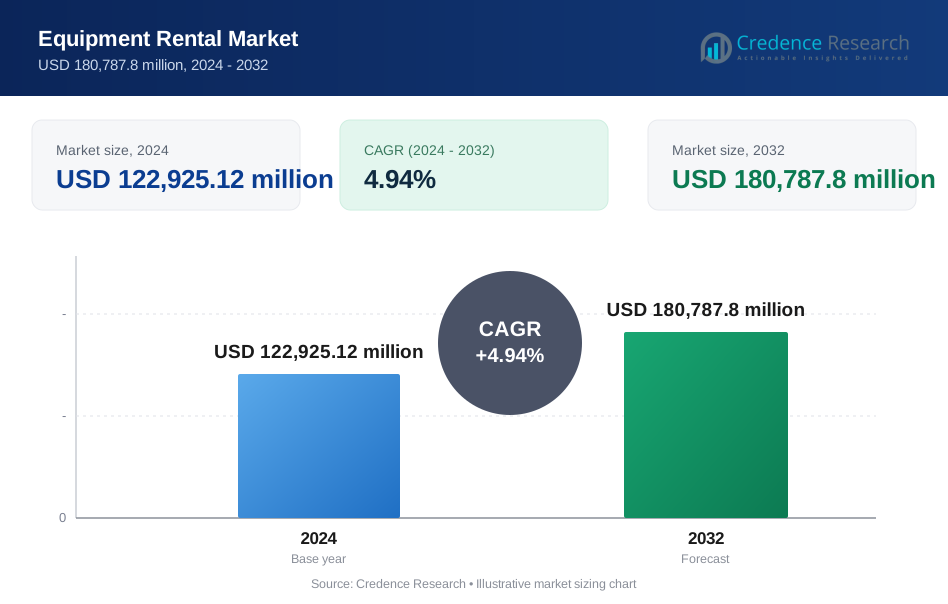
Equipment Rental Market size was valued at USD 122925.12 million in 2024 and is anticipated to reach USD 180787.8 million by 2032, at a CAGR of 4.94% during the forecast period (2024-2032).
Key drivers of the equipment rental market include the rapid expansion of the construction and infrastructure sectors, which require specialized machinery for short-term projects. The growing trend of urbanization and infrastructure development, particularly in emerging economies, has fueled the demand for construction equipment. As these regions continue to develop, the need for temporary, high-quality machinery increases. Additionally, the increasing adoption of rental services across various industries, including manufacturing, mining, and agriculture, has significantly contributed to market growth. The flexibility, cost-effectiveness, and minimal maintenance responsibilities associated with equipment rental services make them an attractive option for businesses looking to optimize capital expenditure. Moreover, the ability to rent equipment on-demand provides businesses with a competitive edge by enabling them to meet fluctuating project requirements. Furthermore, advancements in technology, such as digital platforms for equipment booking and tracking, have enhanced the convenience and efficiency of equipment rental services, enabling companies to streamline operations and reduce downtime.
Regionally, North America holds the largest share of the equipment rental market, driven by the robust construction and industrial sectors in the U.S. and Canada. This region benefits from a well-established rental infrastructure and a high level of consumer trust in rental services. Europe follows closely, with strong demand from the construction, mining, and events industries. The region's stringent environmental regulations have also led to a shift towards rental services that offer more sustainable and efficient equipment options. The Asia Pacific region is expected to witness the highest growth during the forecast period, primarily due to rapid infrastructure development, industrialization, and urbanization in countries such as China and India. Additionally, increased government investment in large-scale infrastructure projects is spurring demand for rental solutions in the region. The Middle East and Africa are also experiencing significant growth in equipment rental demand, particularly in construction and oil and gas sectors, as the need for heavy machinery rises with ongoing infrastructure projects and resource extraction activities.
Market Insights:
- The equipment rental market was valued at USD 122,925.12 million in 2024 and is expected to reach USD 180,787.8 million by 2032, growing at a CAGR of 4.94%.
- Key drivers include the rapid expansion of the construction and infrastructure sectors, creating demand for specialized machinery for short-term projects.
- The growing trend of urbanization and infrastructure development, particularly in emerging economies, continues to fuel the demand for construction equipment.
- Increased adoption of rental services across various industries such as manufacturing, mining, and agriculture is contributing significantly to market growth.
- Flexibility, cost-effectiveness, and minimal maintenance responsibilities make equipment rental services attractive for businesses aiming to optimize capital expenditure.
- Advancements in technology, including digital platforms for equipment booking and tracking, have improved convenience, efficiency, and operations.
- North America holds the largest share of the market, driven by strong construction and industrial sectors in the U.S. and Canada, with Europe following closely due to demand from construction, mining, and events industries.
Market Drivers:
Expansion of Construction and Infrastructure Sectors:
The rapid expansion of the construction and infrastructure sectors significantly drives the growth of the equipment rental market. Specialized machinery is often required for short-term projects, making rental services an attractive option for companies. Large-scale infrastructure development, especially in emerging economies, continues to fuel demand for construction equipment. This market dynamic allows businesses to access state-of-the-art equipment without the high upfront costs associated with ownership. Rental services are increasingly becoming a preferred choice due to their flexibility and ability to meet the short-term needs of construction projects.
Technological Advancements and Digital Platforms:
Technological advancements play a pivotal role in the growth of the equipment rental market. The introduction of digital platforms has streamlined equipment booking, tracking, and maintenance processes. These platforms provide users with real-time information on equipment availability, reducing downtime and improving operational efficiency. Such advancements make it easier for businesses to manage equipment rental needs and ensure that machinery is readily available for use. It also supports better inventory management, which ultimately leads to cost savings and enhanced productivity across industries that rely on rental services.
- For instance, OPTRAFFIC has developed a user-friendly digital platform that allows customers to browse, compare, and rent traffic management equipment with real-time access to product specifications and availability, significantly improving the efficiency and convenience of the rental process.
Cost Efficiency and Capital Optimization:
The increasing demand for cost-effective solutions also drives the equipment rental market. Renting equipment allows businesses to avoid the high capital expenditure associated with purchasing expensive machinery. Companies can allocate resources more efficiently, optimizing their budgets and improving financial flexibility. Renting equipment also eliminates the costs associated with maintenance, repair, and storage, which further reduces operational overhead. These factors make rental services a strategic choice for businesses seeking to optimize their capital expenditure and improve cash flow.
- For instance, Bull Machines has enabled construction companies to save on upfront investment and ongoing maintenance costs by offering reliable multipurpose construction equipment for rent, allowing operators to handle challenging site conditions efficiently while staying within budget.
Growth in Emerging Markets and Urbanization:
Emerging markets, particularly in Asia Pacific, are witnessing rapid urbanization and industrialization, further propelling the demand for equipment rental services. As countries such as China and India undergo significant infrastructure development, the need for specialized equipment continues to rise. Urbanization drives large-scale construction projects, such as residential, commercial, and transportation infrastructure, increasing the demand for temporary machinery. Equipment rental services offer a flexible, scalable solution to meet the evolving needs of these fast-developing markets.
Market Trends:
Integration of Digital Platforms and Mobile Solutions:
The equipment rental market is experiencing a significant shift towards digitalization, with companies increasingly adopting online platforms and mobile applications to streamline operations. These digital tools enable customers to browse inventory, make reservations, and manage rentals remotely, enhancing convenience and accessibility. For instance, platforms like BigRentz have expanded their reach by offering a centralized online marketplace for heavy equipment rentals, connecting customers with a vast network of rental partners across the United States. This trend not only improves the user experience but also allows rental businesses to optimize their fleet management and reduce operational costs.
- For instance, United Rentals has implemented its Total Control® platform, allowing businesses to track equipment usage, optimize fleet management, and reduce downtime through real-time analytics.
Adoption of Subscription-Based and Peer-to-Peer Rental Models:
Another notable trend in the equipment rental market is the rise of subscription-based and peer-to-peer (P2P) rental models. Subscription services, such as "Rental-as-a-Service," allow customers to access equipment on a monthly basis, providing flexibility and cost savings without the commitment of ownership. Concurrently, P2P platforms enable individuals to rent out their personal equipment, fostering a sharing economy and expanding the availability of rental options. These models cater to a diverse customer base, from small businesses to individuals, and are particularly appealing to those seeking short-term access to specialized machinery without the associated costs of purchase and maintenance.
- For instance, Turo has revolutionized vehicle rentals by enabling car owners to lease their vehicles directly to users, creating a decentralized rental ecosystem.
Market Challenges Analysis:
Fluctuating Demand and Market Volatility:
The equipment rental market faces challenges related to fluctuating demand and market volatility. Seasonal demand variations, especially in construction and infrastructure projects, make it difficult for rental companies to maintain consistent revenue streams. Unpredictable economic cycles, including recessions and periods of slow growth, also influence the demand for rental equipment. These market shifts force companies to adapt quickly by adjusting inventory levels and rental pricing, often resulting in financial instability. It becomes difficult for businesses to plan long-term investments or manage operational costs effectively during such periods of uncertainty.
- For instance, United Rentals, Inc. has implemented scalable fleet management practices that allow them to adjust equipment inventory in response to changing project demands and seasonal variations, ensuring operational flexibility and financial stability.
Maintenance and Equipment Downtime:
Equipment maintenance and downtime present significant challenges for the equipment rental market. Rental companies must manage and maintain large fleets of machinery, which requires substantial resources for regular servicing and repairs. Breakdowns or prolonged downtime can result in loss of revenue and customer dissatisfaction. Timely maintenance, while critical for maintaining the quality of service, adds to operational expenses and complicates the rental process. Balancing the costs of repair with the need to keep equipment in optimal working condition requires careful resource management and constant attention to equipment lifecycle.
Market Opportunities:
Expansion into Emerging Markets:
The equipment rental market holds significant opportunities for growth in emerging markets. Rapid urbanization and infrastructure development in regions like Asia Pacific, Latin America, and the Middle East are creating an increasing demand for construction equipment. In these regions, the preference for rental services is growing due to cost-saving benefits and the need for specialized machinery for short-term projects. These markets offer untapped potential for rental businesses to expand their operations, capitalize on new infrastructure projects, and serve the growing construction, mining, and manufacturing industries. Localizing offerings to meet regional demands and providing reliable, high-quality equipment can further drive market penetration in these areas.
Adoption of Green and Sustainable Equipment:
As environmental concerns continue to gain prominence, there is a growing opportunity in the equipment rental market to offer eco-friendly, energy-efficient machinery. Companies are increasingly seeking to reduce their carbon footprints and comply with environmental regulations. The availability of green equipment, such as electric-powered construction machines or energy-efficient generators, presents a valuable opportunity for rental businesses to cater to environmentally-conscious customers. Investing in sustainable equipment can not only attract new clients but also position rental companies as leaders in environmental responsibility, enhancing their competitive edge in the market.
Market Segmentation Analysis:
By Equipment Type The equipment rental market is segmented by equipment type, including construction equipment, material handling equipment, and industrial equipment. Construction equipment dominates the market due to the growing demand for machinery in large-scale infrastructure and construction projects. Material handling equipment, such as forklifts and cranes, is also witnessing robust growth driven by the increasing need for efficient logistics and warehousing solutions. Industrial equipment rental is expanding, especially in manufacturing sectors, as businesses seek specialized machinery for short-term or project-based operations.
By Application The market is categorized by application, including construction, mining, agriculture, manufacturing, and events. The construction sector holds the largest share, fueled by continuous urbanization and infrastructure development worldwide. Mining operations require specific, high-performance equipment, making it a significant segment in the equipment rental market. Agricultural applications are also on the rise, with rental services offering machinery for seasonal farming tasks. The manufacturing sector’s demand for industrial equipment rental continues to increase, driven by project-based needs. The events segment, including exhibitions and large public events, contributes a growing share due to its reliance on temporary equipment for staging and logistics.
By Rental Duration Rental duration plays a vital role in shaping the market. Short-term rentals dominate the market, as businesses prefer flexible, cost-effective solutions for specific projects or seasonal demands. Long-term rentals are also growing, particularly in industries like construction and manufacturing, where extended access to specialized equipment is required. The choice between short and long-term rentals depends on project length, equipment usage, and cost considerations.
Segmentations:
By Equipment Type:- Construction Equipment
- Material Handling Equipment
- Industrial Equipment
- Construction
- Mining
- Agriculture
- Manufacturing
- Events
- Short-Term Rentals
- Long-Term Rentals
- Contractors
- Construction Companies
- Industrial Businesses
- Event Organizers
- Agricultural Enterprises
- North America
- U.S.
- Canada
- Mexico
- Europe
- UK
- France
- Germany
- Italy
- Spain
- Russia
- Belgium
- Netherlands
- Austria
- Sweden
- Poland
- Denmark
- Switzerland
- Rest of Europe
- Asia Pacific
- China
- Japan
- South Korea
- India
- Australia
- Thailand
- Indonesia
- Vietnam
- Malaysia
- Philippines
- Taiwan
- Rest of Asia Pacific
- Latin America
- Brazil
- Argentina
- Peru
- Chile
- Colombia
- Rest of Latin America
- Middle East
- UAE
- KSA
- Israel
- Turkey
- Iran
- Rest of Middle East
- Africa
- Egypt
- Nigeria
- Algeria
- Morocco
- Rest of Africa
Regional Analysis:
North America: Dominant Market Player
North America holds a significant share of the equipment rental market, accounting for 35% of global market revenue. The region's strong construction, industrial, and infrastructure sectors in the United States and Canada drive the demand for rental services. The established network of rental companies caters to diverse industries, ensuring consistent market growth. The increasing need for specialized equipment in urban development projects and infrastructure upgrades maintains a high demand for rental solutions. Several global players operating in North America further solidify its dominance, as businesses rely on high-quality, efficient rental solutions. The trend toward non-ownership models, supported by favorable economic conditions, continues to fuel the expansion of rental services.
Europe: Strong Demand and Diverse Sectors
Europe holds a prominent share of the equipment rental market, contributing 28% to global revenue. The region’s demand for rental services spans across various sectors, including construction, mining, and events. Economic recovery and government investment in infrastructure projects have boosted market expansion. The well-developed rental infrastructure supports the increasing need for equipment in both short-term and long-term projects. Strict environmental regulations also drive the adoption of green, energy-efficient rental equipment. Countries such as Germany, the United Kingdom, and France are key contributors to market growth, with businesses focusing on sustainability while meeting their equipment needs.
Asia Pacific: High Growth Potential
Asia Pacific is witnessing rapid growth in the equipment rental market, accounting for 25% of global market share. Driven by significant infrastructure development, urbanization, and industrialization, countries like China, India, and Japan are leading the way. The demand for rental equipment is increasing, supported by the region's expanding construction, transportation, and energy projects. The growing preference for cost-efficient and flexible rental solutions in emerging economies further boosts market potential. With substantial investments in infrastructure and the rising need for specialized equipment, the region presents immense growth opportunities for market players.
Key Player Analysis:
- United Rentals, Inc.
- H&E Equipment Services, Inc.
- Kanamoto Co., Ltd.
- Nishio Rent All Co., Ltd.
- Ashtead Group PLC
- Hertz Equipment Rental Corporation
- Maxim Crane Works, L.P.
- Ahern Rentals, Inc.
- Boels Rental
- Loxam Group
- Aggreko PLC
- Cramo PLC
- Ramirent PLC
- Speedy Hire PLC
- Sunstate Equipment Co., LLC
Competitive Analysis:
The equipment rental market is highly competitive, with several key players dominating the global landscape. Major companies include United Rentals, Inc., Sunbelt Rentals, and Hertz Global Holdings, which provide a wide range of construction, industrial, and material handling equipment. These companies leverage their extensive fleets, advanced digital platforms, and strong regional networks to maintain their market leadership. The market is characterized by a mix of large multinational corporations and regional players, each aiming to capture diverse market segments. To remain competitive, players are increasingly focusing on expanding their product offerings, improving fleet management, and enhancing customer service. Technological advancements, such as the use of mobile applications and online booking systems, play a crucial role in differentiating competitors in the market. Strategic mergers and acquisitions also contribute to strengthening market presence, allowing companies to expand their reach and enhance operational efficiency in a rapidly growing sector.
Recent Developments:
- In January 2025, United Rentals announced a record fourth quarter and full-year 2024, with revenues surpassing $15 billion, an 8% jump in equipment rental revenue, and a 10% increase to its quarterly dividend.
- In April 2025, Aggreko announced the sale of its Eurasian (Russia and Kazakhstan) power rental businesses for $29 million, following a strategic exit from the region. Aggreko also reported a 14% increase in annual sales to $2.85 billion for 2024, with pre-tax profits nearly tripling to $329 million, driven by strong growth in North America, Europe, Latin America, and Asia Pacific.
- In October 2024, Nishio Holdings announced the integration of the general rentals business of its subsidiary Sacos Corp into Nishio Rent All, while Sacos would focus on specialized rentals (power, railway equipment, used sales).
Market Concentration & Characteristics:
The equipment rental market is moderately concentrated, with a few large players holding significant market share. Major companies such as United Rentals, Sunbelt Rentals, and Hertz Global dominate the global landscape, while numerous regional and local businesses cater to niche markets. These large players benefit from extensive fleets, strong brand recognition, and established networks, which give them a competitive edge. The market is characterized by a mix of long-term and short-term rental services, with increasing demand for flexible and cost-effective solutions across various industries, including construction, manufacturing, and events. It remains fragmented, with opportunities for smaller players to compete by focusing on specialized equipment and localized service offerings. Technological advancements in fleet management, digital platforms, and customer service innovation further influence the market’s competitive dynamics, pushing both large and small players to adapt to evolving consumer needs.
Report Coverage:
The research report offers an in-depth analysis based on Equipment Type, Application, Rental Duration, End-User and Region. It details leading market players, providing an overview of their business, product offerings, investments, revenue streams, and key applications. Additionally, the report includes insights into the competitive environment, SWOT analysis, current market trends, as well as the primary drivers and constraints. Furthermore, it discusses various factors that have driven market expansion in recent years. The report also explores market dynamics, regulatory scenarios, and technological advancements that are shaping the industry. It assesses the impact of external factors and global economic changes on market growth. Lastly, it provides strategic recommendations for new entrants and established companies to navigate the complexities of the market.
Future Outlook:
- The market is projected to experience steady growth, driven by sustained demand in construction, infrastructure, and industrial sectors.
- Government-backed infrastructure initiatives are expected to bolster rental demand, particularly in public works projects.
- High interest rates may encourage more businesses to opt for rental solutions over equipment ownership.
- Technological advancements, including AI and IoT, are anticipated to enhance fleet management and operational efficiency.
- The adoption of electric and eco-friendly equipment is likely to increase, aligning with sustainability trends.
- Labor shortages may drive demand for equipment that reduces manual labor requirements.
- The market is expected to see increased consolidation, with larger players acquiring regional firms to expand their reach.
- Rental services are projected to become more specialized, catering to niche industries such as renewable energy and utilities.
- Digital platforms for equipment booking and management are anticipated to become more prevalent, enhancing customer experience.
- The market is likely to witness increased competition, with new entrants offering innovative solutions to meet evolving customer needs.
Request a Free Sample
Fill in your details and we'll send you a free sample report.
- Sample data tables & charts
- Research methodology
Need a Custom Version of This Report?
Tailor the scope, geography, or segments to your exact requirements.
- Custom geography or segment scope
- Direct access to our analyst team
Frequently Asked Questions
What is the current size of the Equipment Rental Market?
What is the expected market size by 2032?
Which region holds the largest share of the Equipment Rental Market?
Which region is expected to experience the highest growth in the Equipment Rental Market?
Table of Content
Chapter 1. Report Introduction
- 1.1 Report Description & Purpose
- 1.1.1 Report Title & Market Definition
- 1.1.2 Unique Selling Propositions (USP) & Key Differentiators
- 1.1.3 Value Proposition for Stakeholders
- 1.2 Research Objectives
- 1.2.1 Market Sizing Objectives (Volume & Revenue)
- 1.2.2 Segmentation Objectives
- 1.2.3 Competitive Intelligence Objectives
- 1.2.4 Forecast & Scenario Objectives
- 1.3 Report Scope
- 1.3.1 Equipment Rental Scope – Types & Subtypes Covered
- 1.3.2 Geographic Scope – Regions & Countries Covered
- 1.3.3 Historical Period, Base Year & Forecast Period (2024; forecast to 2032)
- 1.3.4 Inclusions & Exclusions
- 1.4 HS Code & Classification Framework
- 1.5 Currency, Units & Pricing Basis
- 1.6 Target Stakeholders
- 1.7 Limitations & Assumptions
Chapter 2. Executive Summary
- 2.1 Global Equipment Rental Market Snapshot
- 2.1.1 Market Size – Historical (2024) & Forecast (2024-2032) (2024: USD 122,925.12 million → 2032: USD 180,787.8 million)
- 2.1.2 Volume & Revenue – Global Totals
- 2.1.3 Key Market Highlights – Top Five Facts
- 2.2 Equipment Rental Market Segmentation Snapshot
- 2.2.1 Market Split by Region – 2024 vs. 2032
- 2.3 Competitive Snapshot
- 2.3.1 Top 10 Players by Revenue Share – 2024
- 2.3.2 Top 10 Players by Volume Share – 2024
- 2.3.3 Recent Strategic Developments (18-Month Summary)
- 2.4 Key Investment Highlights & Strategic Conclusions
Chapter 3. Equipment Rental Market Dynamics & Industry Analysis
- 3.1 Market Overview & Context
- 3.1.1 Equipment Rental Market Position in the Broader Automotive Value Chain
- 3.1.2 OEM vs. Replacement Market Dynamics
- 3.1.3 Market Maturity & Development Stage by Region
- 3.2 Equipment Rental Market Drivers
- 3.3 Equipment Rental Market Restraints & Challenges
- 3.4 Equipment Rental Market Opportunities
- 3.5 Porter's Five Forces Analysis
- 3.5.1 Threat of New Entrants
- 3.5.2 Bargaining Power of Suppliers
- 3.5.3 Bargaining Power of Buyers
- 3.5.4 Threat of Substitutes
- 3.5.5 Competitive Rivalry – Intensity Assessment
- 3.6 Equipment Rental Value Chain Analysis
- 3.6.1 Upstream – Raw Material/Input Suppliers
- 3.6.1.1 Raw Material/Input 1
- 3.6.1.2 Raw Material/Input 2
- 3.6.1.3 Raw Material/Input 3
- 3.6.2 Midstream – Production/Manufacturing/Service Delivery
- 3.6.2.1 Production/Process Overview
- 3.6.2.2 Key Facility Locations & Capacity by Manufacturer
- 3.6.3 Downstream – Distribution & End Consumer
- 3.6.3.1 Primary Channel – B2B/OEM
- 3.6.3.2 Secondary Channels – Dealer, Retail, Online, Direct
- 3.6.4 Value Chain Profitability Analysis
- 3.6.1 Upstream – Raw Material/Input Suppliers
- 3.7 PESTEL Analysis
- 3.7.1 Political Factors
- 3.7.2 Economic Factors
- 3.7.3 Social Factors
- 3.7.4 Technological Factors
- 3.7.5 Environmental Factors
- 3.7.6 Legal Factors
- 3.8 Equipment Rental Supply Chain Analysis
- 3.8.1 Raw Material/Input Supply Risk Assessment
- 3.8.2 Manufacturing Concentration Risk (Geographic Exposure)
- 3.8.3 Trade Disruption Impact Analysis
- 3.9 Regulatory & Policy Landscape
Note: The regulatory and policy landscape section covers regulations based on their applicability to the market, Equipment Rental category, geography, and scope of the study. Only regulatory frameworks with a material impact on operations, compliance, trade, sustainability, or market access are analyzed in detail.
Chapter 4. Key Investment Pockets & Opportunity Analysis
- 4.1 Equipment Rental Market Attractiveness Analysis
- 4.1.1 By Region – Investment Attractiveness Matrix (Volume × CAGR)
- 4.2 Absolute Revenue Growth Opportunity
- 4.2.1 By Region – Absolute USD Growth Through 2032
- 4.3 Incremental Volume Opportunity
- 4.3.1 By Region – Incremental Volume Through 2032
- 4.3.2 Segment – Incremental Volume
- 4.4 Emerging Submarket Opportunity Deep Dive (Subject to Applicability)
- 4.5 Emerging Market Opportunity Scorecards
- 4.5.1 United States
- 4.5.2 Europe
- 4.5.3 Asia
- 4.5.4 Middle East & Africa
Note: Emerging Market Opportunity Scorecards will be included based on relevance and strategic importance. Regions listed are indicative and may vary depending on data availability and market dynamics.
Chapter 5. Equipment Rental Import-Export Analysis & Trade Flows
- 5.1 Global Trade Overview
- 5.1.1 Global Export Value by Country (2024)
- 5.1.2 Global Export Volume by Country (2024)
- 5.1.3 Global Import Value by Country (2024)
- 5.1.4 Global Import Volume by Country (2024)
- 5.1.5 Net Trade Balance by Country (2024)
- 5.2 Export Analysis – Segment
- 5.2.1 Type 1 (HS Code)
- 5.2.2 Type 2 (HS Code)
- 5.2.3 Type 3 (HS Code)
- 5.2.4 Type 4 (HS Code)
- 5.2.5 Type 5 (HS Code)
- 5.3 Import Analysis – Segment
- 5.3.1 Type 1 (HS Code)
- 5.3.2 Type 2 (HS Code)
- 5.3.3 Type 3 (HS Code)
- 5.3.4 Type 4 (HS Code)
- 5.3.5 Type 5 (HS Code)
- 5.4 Average Unit Trade Prices
- 5.4.1 Average Export Price – Segment & Country
- 5.4.2 Average Import Price – Segment & Source Country
- 5.4.3 Price Trends (2024)
- 5.5 Key Trade Route Analysis
- 5.5.1 Trade Route 1
- 5.5.2 Trade Route 2
- 5.5.3 Trade Route 3
- 5.5.4 Trade Route 4
- 5.5.5 Trade Route 5
- 5.6 Trade Policy Impact Assessment
- 5.6.1 US Anti-Dumping & Section 301 Tariffs
- 5.6.2 EU Customs Union Impact
- 5.6.3 Major Free Trade Agreements
- 5.6.4 USMCA Rules of Origin
Note: Trade policy analysis will be included only where relevant to the Equipment Rental market.
Chapter 6. Competitive Landscape & Company Benchmarking
- 6.1 Equipment Rental Market Concentration & Structure
- 6.1.1 Herfindahl-Hirschman Index (HHI) – vs. 2024
- 6.1.2 Tier 1, Tier 2 & Tier 3 Market Structure
- 6.1.3 Global, Regional & Local Player Dynamics
- 6.2 Equipment Rental Market Share Analysis – 2024
- 6.2.1 Global Revenue Share by Company
- 6.2.2 Global Volume Share by Company
- 6.2.3 Regional Revenue Share
- 6.2.4 Market Share Evolution ( vs. 2024)
- 6.2.5 OEM Segment Share by Company
- 6.2.6 Replacement Segment Share by Company
- 6.3 Production/Delivery Capacity & Facility Analysis
- 6.3.1 Global Installed Capacity
- 6.3.2 Capacity Utilization Rates
- 6.3.3 Production/Output Volume
- 6.3.4 Facility Locations & Capacity Map
- 6.3.5 Planned Capacity Additions
- 6.4 Equipment Rental Competitive Benchmarking Matrix
- 6.4.1 Revenue, Volume, CAGR & Profitability Comparison
- 6.4.2 Channel Revenue Mix
- 6.4.3 Geographic Revenue Exposure
- 6.4.4 R&D Intensity
- 6.4.5 Sustainability Maturity
- 6.5 Strategic Developments in Equipment Rental (Last 24 Months)
- 6.5.1 Mergers, Acquisitions & Divestments
- 6.5.2 New Equipment Rental Launches
- 6.5.3 Facility Expansions
- 6.5.4 Strategic Alliances, Joint Ventures & Partnerships
- 6.5.5 Distribution Expansion & Market Entry
- 6.5.6 Sustainability & ESG Initiatives
- 6.6 Competitive Strategy Mapping
- 6.6.1 Leader, Challenger, Follower & Niche Classification
- 6.6.2 Pricing Strategy Comparison
- 6.6.3 Channel Strategy Matrix
Note: Strategic developments are included based on their materiality and the availability of reliable information.
Chapter 7. Global Equipment Rental Market – By Distribution Channel
- 7.1 Segment Overview
- 7.1.1 Volume & Revenue Split by Channel (2024 & 2032)
- 7.1.2 Channel Mix Evolution (2024-2032)
Chapter 8. Regional Market Analysis – Global Overview
- 8.1 Global Regional Overview
- 8.1.1 Regional Volume Share
- 8.1.2 Regional Revenue Share
- 8.1.3 Regional Volume by Region
- 8.1.4 Regional Revenue by Region
- 8.1.5 Regional Forecast Through 2032
- 8.2 Cross-Regional Segment Analysis
- 8.2.1 By Distribution Channel
- 8.2.2 By Brand/Price Tier
Chapter 9. North America Equipment Rental Market
- 9.1 United States
- 9.2 Canada
- 9.3 Mexico
Chapter 10. Europe Equipment Rental Market
- 10.1 Germany
- 10.2 France
- 10.3 Italy
- 10.4 United Kingdom
- 10.5 Spain
- 10.6 Poland
- 10.7 Russia
- 10.8 Netherlands
- 10.9 Belgium
- 10.10 Sweden
- 10.11 Denmark
- 10.12 Norway
- 10.13 Rest of Europe
Chapter 11. Asia Pacific Equipment Rental Market
- 11.1 China
- 11.2 India
- 11.3 Japan
- 11.4 South Korea
- 11.5 Thailand
- 11.6 Indonesia
- 11.7 Vietnam
- 11.8 Malaysia
- 11.9 Australia
- 11.10 Rest of Asia Pacific
Chapter 12. Latin America Equipment Rental Market
- 12.1 Brazil
- 12.2 Argentina
- 12.3 Colombia
- 12.4 Chile
- 12.5 Rest of Latin America
Chapter 13. Middle East Equipment Rental Market
- 13.1 Saudi Arabia
- 13.2 United Arab Emirates
- 13.3 Turkey
- 13.4 Israel
- 13.5 Iran
- 13.6 Rest of the Middle East
Chapter 14. Africa Equipment Rental Market
- 14.1 South Africa
- 14.2 Egypt
- 14.3 Nigeria
- 14.4 Morocco
- 14.5 Rest of Africa
Chapter 15. Equipment Rental Company Profiles
- 15.1 [Company 01]
- 15.1.1 Company Overview
- 15.1.2 Key Management Personnel
- 15.1.3 Products & Services Portfolio
- 15.1.4 Financial Performance
- 15.1.5 Key Market Focus & Geographic Presence
- 15.1.6 Recent Developments & Strategic Initiatives
Note: The company profile list is preliminary and may change based on research findings, market developments, data availability, and client requirements.
Chapter 16. Appendices
- Appendix A – List of Abbreviations & Acronyms
- Appendix B – Industry Classification Code Reference – Full Series
- Appendix C – Production & Capacity Data Tables
- Appendix D – End-Use & Demand Base Tables
- Appendix E – Consumption & Replacement Rate Assumptions
- Appendix F – ASP Reference Tables
- Appendix G – Manufacturing & Facility Database
- Appendix H – Import-Export Data Tables
- Appendix I – Regulatory Summary Tables
- Appendix J – Primary Research Participant List (Anonymized)
- Appendix K – Primary Research Questionnaire Framework
- Appendix L – Data Sources & Bibliography
- Appendix M – Market Size Divergence & Source Comparison
Chapter 17. Research Methodology
- 17.1 Research Framework & Philosophy
- 17.2 Secondary Research – Sources, Hierarchy & Data Extraction
- 17.3 Data Modeling – Bottom-Up & Top-Down Market Sizing
- 17.4 Primary Research – Stakeholder Framework, LOI & Sample Sizes
- 17.5 Forecast Methodology – Regression, Scenario & Sensitivity Analysis
- 17.6 Quality Control – Four-Layer Validation Framework
- 17.7 Limitations & Standard Assumptions
- 17.8 Disclaimer
